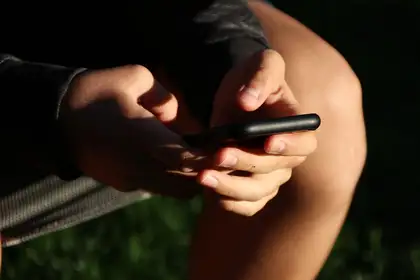
A recent study by Marco Gui and colleagues makes an important contribution to the ongoing discussion about young people's use of social media. Their findings suggest that earlier access to social media is associated with poorer academic performance. While a growing body of research has examined the relationship between social media use and psychological wellbeing, far less attention has been paid to educational outcomes, making this study a valuable addition to the evidence base.
It is important, however, to interpret these findings carefully, as this is an observational study. This is particularly important as countries, including New Zealand, continue to debate age restrictions and social media bans. The wider discussion of social media use encompasses consideration of not just ‘how’ young people are using their time online, but also the ‘why’, and some of those answers are best coming from young people themselves.
Doctoral research conducted recently at Massey University (Clapperton, 2024) found that young people themselves, aged between 16 and 18, were highly aware of both the benefits and the risks of social media. Many of the participants argued that younger adolescents and children would benefit from greater protections and consistently highlighted the important role parents play in helping children navigate online environments.
The young people recognised that they needed help to manage the harms of social media. However, interventions with schools had limited impact on them, often because they were perceived as being presented from an adult perspective that was out of touch. The same could apply to parents.
What worked for these young people was being supported to generate their own solutions to minimise adverse impacts and to mitigate any harms that they experienced. These solutions were experienced as more relevant and efficacious because young people were involved in identifying and responding to the problems themselves.
There is, however, a limit to what young people can change as individuals. They could only generate solutions for harms that were happening at the individual level. As individuals, they couldn't affect the wider social norms and infrastructure that shaped what was possible on social media for them.
This was especially so for young women in relation to body image concerns. Individual strategies can help young people manage their own experiences, but they cannot by themselves change the wider social and cultural pressures that shape those experiences.
This distinction is important when we talk about responsibility for young people's social media use. The "your choice" discourse is often treated as a given, but young people's choices are shaped by the social environments and infrastructures in which those choices are made.
The same applies when we consider the amount of time young people spend online.

Professor Kirsty Ross and Professor Sarah Riley
An important implication of the Gui et al (2026) study is that the impact of social media may be less about the content children are exposed to and more about what social media replaces. Time spent online inevitably displaces other activities that support healthy development, including sleep, physical activity, face-to-face social interaction, play, reading and learning. The opportunity cost of screen time is something we need to consider and focus on.
That said, the solution is unlikely to be simply reducing screen use. For some young people, particularly those who are socially isolated or have limited opportunities for extracurricular activities, the online world provides important opportunities for connection, belonging and learning.
The challenge is therefore not whether young people should use social media, but how they use it. When online engagement is intentional, balanced with other activities and supported by interested, engaged adults, it is likely to have very different consequences than when it becomes the default way young people spend their time.
This also means that interventions need to operate at more than one level. Young people need support to develop their own strategies for navigating social media, but they cannot be expected to solve problems that are created or reinforced by wider social norms and the infrastructure of social media platforms.
Solutions at an individual level are the proverbial ambulance at the bottom of the hill. We also need to consider the environments in which young people are making choices and the responsibilities of the adults, institutions and platforms that shape those environments.
The proposed restrictions on social media access for under-16s therefore raise important questions. Greater protection for younger children may be supported by young people's own views, as well as emerging research. But we should also ask what kind of support and intervention will actually help young people navigate social media and whether a single policy response can address the range of harms and benefits associated with it.
Young people themselves have valuable insights into what works and what does not. They understand the benefits of social media as well as its risks, and they can identify solutions that are relevant to their own experiences.
Listening to those perspectives should be part of the conversation as New Zealand considers how best to respond to young people's use of social media.
This article was first published on The Post on 13 September 2026.
Professor Kirsty Ross is a Senior Clinical Psychologist at Te Kunenga ki Pūrehuroa Massey University.
Professor Sarah Riley is part of the critical health psychology programme at Te Kunenga ki Pūrehuroa Massey University.
Related news
Opinion: When did asking for help become a public safety problem?
By Dr Matt Wynyard

Opinion: Change to our built environment is coming, and not only are we not ready, we’re spending money trying to avoid the inevitable
By Professor Elspeth Tilley and Simone Gabriel

Opinion: Healthcare decisions belong to evidence, not headlines
By Associate Professor Margaret Sandham