Project summary
This research on Mātauranga Kai was accomplished alongside Māori communities to explore how traditional and contemporary knowledge about kai can strengthen oranga - a holistic view of wellbeing that includes physical, spiritual, mental, environmental and social health. By bringing together archival records, lived experiences and mātauranga shared by whānau, the research shows that kai is far more than nutrients alone. Kai Māori is a way to connect with others, express identity, demonstrate manaakitanga and maintain relationships with whenua and culture.
Māori food culture and wellbeing on TikTok: a content and thematic analysis
Indigenous Foodways in Transition: A Qualitative Study With Māori Elders in Aotearoa New Zealand
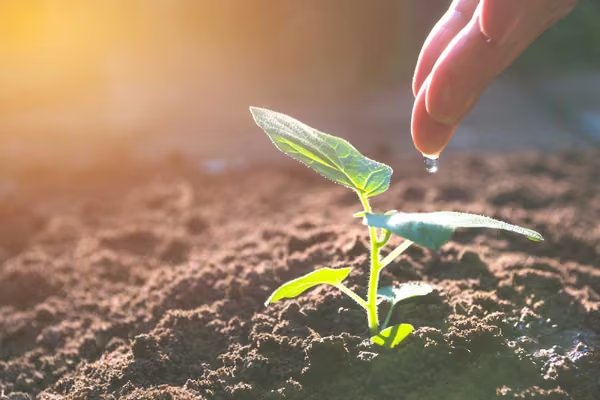
Insights from a whānau led initiative to grow kai on ancestral whenua further highlighted how tikanga and mātauranga based practices can support wellbeing in everyday life, showing how reconnecting with land and food systems can foster health, capability and collective strength.
Conceptualizing indigenous food sovereignty in Aotearoa New Zealand
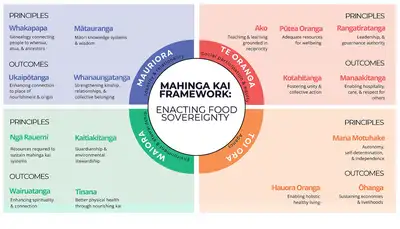
Together, these insights shaped the Mahinga Kai Framework: Enacting Food Sovereignty, which brings together Māori values, practices and knowledge to show how kai Māori supports oranga in contemporary contexts.
Mahinga Kai Framework figure
"What makes me happy is that fact that we are growing a hapori, we’re growing more than just kai in that māra, we are growing so much more than kai... there were relationships, there was love, there was food, of course there was food, but there was knowledge."
Project team
Learn more about the researchers and their areas of expertise.

Dr Nikki Renall
Dr Renall is also a Key Researcher with the Riddet Institute.

Professor Lisa Te Morenga
Professor Te Morenga is also a Principal Investigator with the Riddet Institute.
Research outputs
Kai Anamata mō Aotearoa – E Kai Māori Wānanga
This video showcases a 3-day E Kai Māori wānanga focused on sharing traditional knowledge of kai – led by Māori Chef Joe (Hamuera Orupe McLeod).
Whāia te mātauranga hei oranga mō koutou: A visual timeline of the influences on Māori wellbeing
Whāia te mātauranga hei oranga mō koutou is a visual resource designed to help students, teachers and lecturers explore how cultural and social factors shape Māori wellbeing. It begins with a simple overview of Māori models of health, followed by a visual timeline showing key events in Aotearoa New Zealand’s history that have influenced Māori wellbeing over time. The final section offers short explanations of these events, which are colour-coded to show the areas of wellbeing they relate to – Mauriora (cultural identity), Waiora (environment), Toiora (healthy lifestyles), Te Oranga (participation in society) or Hauora (overall wellbeing).
Book chapters
Book chapters
Kai Māori – the evolution of indigenous foodway in Aotearoa
Our chapter Kai Māori: The Evolution of an Indigenous Foodway in Aotearoa features in Exploring Indigenous Foodways amidst Global Shifts. It traces the development of Māori foodways from Pacific origins, showing how food practices emerged from deep spiritual, cultural, and environmental relationships with land and sea. The chapter details how Māori adapted to a new and challenging food landscape through hunting, gathering, and cultivation guided by tikanga, seasonal knowledge, and collective organisation. It then explores how European arrival and colonisation reshaped kai Māori through introduced foods, land loss, environmental degradation, and socioeconomic change. The chapter concludes by highlighting the resilience of kai Māori and contemporary food sovereignty movements that are revitalising Indigenous food knowledge, relationships with the environment, and cultural wellbeing.
Kai Māori - the evolution of an indigenous foodway in Aotearoa
Te Morenga, L., & Renall, N. (2025). Kai Māori – the evolution of an indigenous foodway in Aotearoa.. In R. Tupai-Firestone (Ed.) Exploring Indigenous Foodways amidst Global Shifts. (pp. 131 - 171). Wellington, New Zealand: Ala Le Manuia
Māori health and nutrition
Our chapter ‘Māori Health and Nutrition’ features in the second edition of Food and Nutrition Throughout Life, an international nutrition textbook. It introduces readers to Māori as the Indigenous people of Aotearoa New Zealand and explains how history, colonisation, and social conditions have shaped Māori food practices, diets, and health. The chapter connects traditional and contemporary Māori foodways with present‑day nutrition‑related health outcomes and places nutrition within Māori understandings of holistic wellbeing. It also highlights Māori‑led initiatives that support food security, cultural identity, and wellbeing for future generations.
Food and Nutrition Throughout Life - 2nd Edition (In Press)
Journal articles
Journal articles
Indigenous Foodways in Transition: A Qualitative Study with Māori Elders in Aotearoa New Zealand
Our research explored how Māori foodways have changed over the past 70 years through the lived experiences of Māori kaumātua (elders). Their stories reveal how colonisation, land loss, urbanisation and environmental change reshaped Māori food systems and access to traditional kai sources, influencing the ways people obtain, share and experience kai today.
Despite these changes, Māori foodways have remained resilient and adaptive. Across diverse rural and urban experiences, kaumātua described enduring values such as respecting kai, avoiding waste, sharing with others, and caring for people and place. These values persisted across generations, even as the food environment changed.
Participants also reflected on how childhood experiences with kai shaped their relationships with food throughout life. Whānau practices, access to resources and opportunities to learn about kai contributed to distinct food identities and influenced how people understand and engage with kai today.
The study highlights that kai Māori is much more than nutrition. Kai connects people to culture, whānau, whenua and whakapapa, while supporting identity, belonging and wellbeing. Understanding these connections can help inform more meaningful and culturally responsive approaches to health and nutrition in contemporary Aotearoa.
Indigenous Foodways in Transition: A Qualitative Study With Māori Elders in Aotearoa New Zealand
Conceptualising Indigenous food sovereignty in Aotearoa New Zealand
Our study explored how revitalising mahinga kai - the traditional Māori practices of growing, gathering and caring for food – can strengthen wellbeing, promote equity and support food sovereignty.
Guided by whānau and community voices, the research examined Māori aspirations for food sovereignty and the practical steps that can be supported through policy, research and tribal initiatives. Working with whānau involved in a māra kai initiative, the study showed that mahinga kai is far more than producing food.
Māori food sovereignty was described not as returning to the past, but as a living, adaptable practice grounded in values, relationships and collective decision-making.
This inclusive approach reflects resilience and may resonate with other Indigenous communities navigating the balance between cultural continuity and contemporary life.
These insights informed the Mahinga Kai Framework: Enacting Food Sovereignty, which brings together four interconnected areas - cultural identity, environmental stewardship, participation in systems and decision making, and healthy everyday lifestyles - to show how mahinga kai supports oranga (holistic wellbeing).
Conceptualizing indigenous food sovereignty in Aotearoa New Zealand
Māori food culture and wellbeing on TikTok: a content and thematic analysis
Our research explored how Māori use TikTok to share and celebrate kai Māori – the traditional foods, practices and values of Māori, the Indigenous peoples of Aotearoa New Zealand.
On TikTok, people taught, joked, reminisced and shared everyday moments involving kai Māori. These posts showed Māori connecting with each other, learning from each other and expressing pride in who they are.
Kai Māori was shown not just as food, but as something that strengthens identity, relationships and connection to Te Ao Māori. It was a source of pride, a way of keeping traditions alive and a way of strengthening connections to whānau and whenua. In this way, kai Māori acted as a form of positive cultural communication and nourishment.
These insights reveal that kai is more than nutrients. Health promotion approaches that reflect this understanding are better placed to support Māori wellbeing.
Māori food culture and wellbeing on TikTok: a content and thematic analysis
"I'm sorry but you KNOW your nans frybread is elite when she cuts it with that bone handle looking butter knife 🤤🤎"
Funding and support

Health Research Council (HRC)
Riddet Institute
Royal Society Te Apārangi
"So that our practices and our food practices, will allow for our health…it’s our knowledge basket, to understand our environment and to be able to listen to signs in nature, know...what that means for us, to take back the skills our people once had that will enrich us better than…all that other jazz."
PhD project
How can Māori chefs shape the future of kai in Aotearoa NZ and contribute to improving wellbeing for Māori and Aotearoa NZ as a whole?
PhD student: Asher Regan, Riddet Institute
Asher’s research explores the intersection of mātauranga Māori, food systems, and public health. With a background as a professional chef, his research explores how Māori chefs shape contemporary understandings of kai in Aotearoa and contribute to wellbeing. His work highlights the role of Indigenous knowledge, culture and food practices in strengthening identity, health and more equitable food systems.
Aligned work
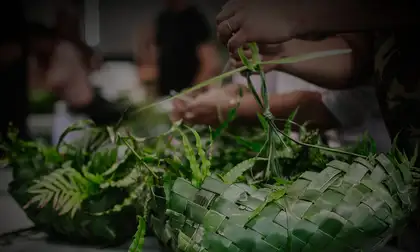
E Kai Māori
E Kai Māori is a national kaupapa working alongside marae and iwi to reconnect people with traditional and contemporary mātauranga kai. Led by Chef Joe (Hamuera Orupe McLeod) and Adrian McVeigh, the initiative delivers wānanga across diverse tribal regions, sharing knowledge of foraging, preparation and tikanga, alongside the deeper cultural relationships surrounding kai.
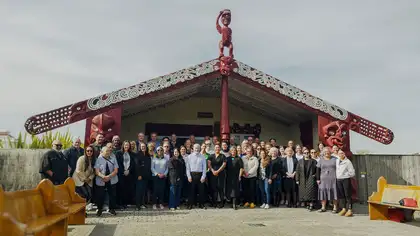
Kai Anamata mō Aotearoa
Kai Anamata mō Aotearoa is a research partnership between the Sustainable Nutrition Initiative at Massey University and Wakatū Incorporation, combining food system modelling with mātauranga Māori and tikanga‑led approaches to support Māori wellbeing, food sovereignty, sustainable nutrition, and environmental and community wellbeing.
In the media
TikTok kai content feeds cultural pride, Te Waha Nui, 4 June 2025
Māori kai and diet knowledge sought to promote wellness, RNZ, 16 November 2021
Related content