
Ko te rangi, ko te whenua, te hua tangata
The sky and land are the common bond for all people
Ko wai mātau – About us
A vibrant Māori economy is beneficial to Māori and Aotearoa New Zealand.
Te Au Rangahau is a specialist centre that works with organisations and leaders to connect te ao Māori – the Māori world – with te ao pakihi – the business world.
The research by our innovative team of Māori academics contributes to the aspirations and wellbeing of Māori people and their enterprises, empowering them to succeed – financially, culturally, environmentally, socially and spiritually – in accordance with tikanga.
We collaborate with New Zealand businesses and organisations that are looking to engage with Māori business and develop a deeper understanding of te ao Māori.
Ultimately, our mission is to be a catalyst for indigenous entrepreneurship, innovation and enterprise to advance in a variety of organisational settings and contexts.
Te Au Rangahau identity
We aim to advance business and leadership knowledge that benefits the Māori economy.
With this whakaaro (intention) in mind, the tohu (symbol) represents hinengaro (consciousness), much like neurons in the brain transmitting different pieces of information.
The puhoro and koru patterns signify fast-transmitting neurons and cells zapping through the brain, while the koru signifies new learning.

Te Au Rangahau logo.
Hitoria – History
Hitoria – History
Te Au Rangahau (TAR) was born in 2003, when a collective of Māori staff in Massey’s College of Business (Te Rangiwhenua) united under 1 kaupapa.
The aim was to enhance the wairua and wawata of Māori across the 3 Massey campuses – Manawatū, Wellington and Albany – by combining their skills, knowledge and networks.
This small but passionate group strived to establish a centre to conduct, contribute to and disseminate knowledge relevant to Māori business and Māori in organisational settings.
Hence, the seed was sown. Te Au Rangahau, The Pathway to Māori Research in Business, was established and provided a base for staff, students and stakeholders in ‘Māori business’ to make a contribution, first and foremost to Māori society but also to Massey University and the business world.
Through TAR, new relationships were successfully established between Māori staff and other research centres, including those with the Federation of Māori Authorities, Poutama Trust and marae committees.
Before long, TAR expanded its role to support and mentor Māori staff in their career development, facilitate postgraduate research that impacted Māori, and hold te reo writing workshops for Massey staff and students.
In 2013, Massey University hosted Te Pae Roa 2040: Three Decades of Māori Development 1984-2013. This was a nationally-significant Māori conference aimed at considering pathways for Māori development into the future.
Summarising the conference, Sir Mason Durie suggested that the future success of Māori depends on developing alliances with like-minded people who share a sense of purpose while maintaining their identity and autonomy.
The conference spurred a profound shift in our vision. The decision was made to expand our focus beyond research to become a specialist centre that incorporates issues not only pertinent to Māori business but also to Māori leadership.
Today, as a specialist centre, TAR engages in teaching, learning and community engagement initiatives as well as research. This broader focus has created greater opportunities for us to contribute to Māori advancement through the Māori economy, Māori business in its broadest sense, and Māori leadership in various organisational settings and contexts.
The Māori Economy
The Māori Economy
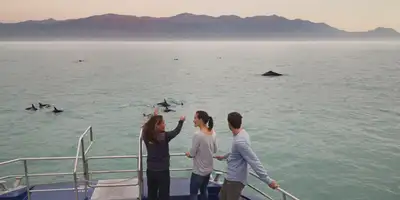
Whai Rawa, Whai Mana, Whai Oranga – Creating a world leading indigenous blue economy. Image credit: Sara Orme
The Māori economy is a powerful player in the sustained economic growth of Aotearoa New Zealand. In 2023, it was estimated to have an asset base of around $126 billion and contribute $32 billion in value to Aotearoa New Zealand's GDP.
It encompasses small and medium enterprises, authorities, pan-tribal corporate entities, iwi that have settled their Treaty claims with the Crown and burgeoning social enterprises.
Māori business is rising – 70% of the Māori asset base is in the hands of Māori employers and the self-employed. But the economy is an old one.
Established by the founding ancestors who arrived here from Eastern Polynesia. The challenge for Māori enterprise today is in deciding how to retain elements of this ancient past while advancing in globalisation, digitisation and technological developments.
Projections estimate the Māori economy will create an additional $12 billion per annum by 2060. This creates an opportunity for 150,000 additional jobs and relies on the mutual development of both economies.
Furthermore, the Māori population is much younger than the New Zealand population (34% of Māori were aged under 15 at the last census), meaning there will be significant numbers of Māori joining the workforce over the coming years.
The Māori economy needs to be ready and capable of supporting this growth, and poised to encourage these young Māori onto enterprise and entrepreneurial pathways.
Through Te Au Rangahau, we hope to make Māori and indigenous business research meaningful and useful for the good of Aotearoa.
"Māori culture for a long time has been seen as a liability for many. I feel that point of difference is one of our most untapped resources and assets ever."
Māori Entrepreneur Robett Hollis

Ngā rangahau – Our projects
The Te Au Rangahau research platform is based on 4 fundamental pillars that work in unison to support and develop a prosperous and sustainable Māori economy.
The wha whai
Whai Rawa – Economy
Whai Rawa – Economy Understanding the function and form of the Māori economy and researching strategies to support growth and development.
Indigenous economic development
Te Au Rangahau member: Dr Jason Paul Mika
Inequalities and intervention in Māori governance
Te Au Rangahau member: Dr Jason Paul Mika
PhD projects
Exploring the relationship between the economy and crown-Iwi patnership in Aotearoa
Doctoral student: Kowhai Dalton
Supervisors: Professor Matt Roskruge, Ms Jane Frances and Associate Professor Sam Richardson
Understanding Economic Resilience - The Case for Aotearoa New Zealand
Doctoral student: Rennae Cherry
Supervisors: Professor Matt Roskruge and Professor Jacques Poot
Whai Pakihi – Enterprise
Whai Pakihi – Enterprise Understanding the factors that foster an effective and enabling Māori enterprise ecosystem.
Te hononga: Modelling indigenous collaborative enterprise
What are the bases for Māori enterprise collaboration? How do Māori activate Indigenous entrepreneurial capabilities for collaboration and what forms do Māori enterprise collaborations take?
By exploring Māori enterprise collaboration as a fundamental but challenging strategy for Māori economic development, this project identifies principles and models which can inform Māori and non-Māori about enterprise collaboration. It does this by using mātauranga Māori, kaupapa Māori, tikanga Māori and te reo Māori, as well as considerations of non-Māori principles, practices and technologies for enterprise collaboration.
Te Au Rangahau member: Matt Roskruge
Tourism and sustainable development goals
Tourism is of great importance to economic wellbeing in Aotearoa, and in the Pacific Islands included in this study (Samoa, Fiji, Vanuatu and the Cook Islands).
The impact of COVID-19 on the tourism sector provides a unique opportunity to rethink how tourism can more sustainably benefit Aotearoa and the Pacific.
Building on Indigenous knowledge and using a Vanua research framework, the project will conduct a stock-take of the impacts of COVID-19 on these tourist destinations, analyse the policies and strategies being developed in response to the crisis, hold widespread discussions/kōrero/talanoa with affected people and, on the basis of these, re-imagine tourism using Indigenous voices and concepts.
Te Au Rangahau members: Dr Jason Mika and Professor Regina Scheyvens
Whai Mana – Entrepreneurship
Whai Mana – Entrepreneurship Supporting successful Māori entrepreneurship and examining the personal and social identities of Māori entrepreneurs.
Engaging project management paradoxes in Māori projects
Whai Hua – Society
Whai Hua – Society Research linking Māori business and economic success to a thriving Māori society.
Rutherford Discovery Fellowship – Social Capital in Aotearoa
Te Au Rangahau member: Matt Roskruge
Ko wai mātau – Who we are
We are specialists who work with organisations and leaders to connect the Māori world (te ao Māori) with the business world (te ao pakihi).




Professor Dame Farah Palmer


Professor Matt Roskruge
Ā mātau mahi – Our services
Our range of services include commission research, advice and training, event management, postgraduate mentorship and marae support.
Research collaboration
Research collaboration
We design, conduct and peer-review research related to Māori and Indigenous business and economy. We can also participate in existing research programmes that are underway and welcome Indigenous research opportunities with institutions in Aotearoa and abroad.
Advice and training
Advice and training
Practical advice and training for businesses interested in learning about Māori business and economy.
Speaking and events
Speaking and events
Hosting, facilitating and speaking at events and seminars to transfer knowledge of Māori business and economy.
Postgraduate mentorship
Postgraduate mentorship
Supervision and support for Māori and non-Māori postgraduate students interested in studying, researching and engaging with Māori and Indigenous businesses or the Māori economy.
Media commentary
Media commentary
We are available for an interview and written commentary on topics relating to Māori and Indigenous business, economics or economies. Our affiliates and staff are also subject experts able to provide insights across a range of business-related disciplines.
Marae and community support
Marae and community support
Practical support for marae, iwi, hapu and whānau to help resolve business, economic or data-related issues. We can also assist in running and reviewing annual census, business case submissions and data analysis. Low or no-fee support is available.
Te hononga – Partners and affiliates
Riddet Institute

Stanford Woods Institute for the Environment

Motu

Ngā Pae o te Māramatanga (NPM)

Central Economic Dvelopment Agency (CEDA)
Australian & New Zealand Academy of Management (ANZAM)
Tuhinga – Publications
Journals
Journals
2021
Kukutai, T., Clark, V., Mika, J. P., Muru-Lanning, M., Pouwhare, R., Sterling, R., Teague, V., Watts, D., & Cassim, S. (2021). The COVID-19 domestic vaccine pass: Implications for Māori.
Houkamau, C. A., Satherly, N., Stronge, S., Wolfgramm, R., Dell, K. M., Mika, J. P., Newth, J., & Sibley, C. G. (2021). Cyberbullying towards Māori is rife in New Zealand: Incidences and demographic differences in the experiences of cyberbullying among Māori. Cyberpsychology, Behavior, and Social Networking.
Mika, J. P., & Scheyvens, R. (2021). Te Awa Tupua: Peace, justice and sustainability through Indigenous tourism. Journal of Sustainable Tourism, 1-22.
Scheyvens, R., Carr, A., Movono, A., Hughes, E., Higgins-Desbiolles, F., & Mika, J. P. (2021). Indigenous tourism and the sustainable development goals. Annals of Tourism Research, 90(2021), 103260
2020
Barrett, M., Watene, K., & McNicholas, P. (2020) Legal personality in Aotearoa New Zealand: an example of integrated thinking on sustainable development. Accounting, Auditing & Accountability Journal, ahead of print(ahead-of-print)10.1108(AAAJ-01-2019-3819 Dutta, M. J., Elers, C., Jayan, P. (2020). Culture-centered processes of community organizing in COVID19 response: Notes from Kerala and Aotearoa New Zealand. Frontiers in Communication Dutta, M.J & Ngā Hau (in press) Voice infrastructures and alternative imaginaries: Indigenous social movements against neocolonial extraction In Crick, N (Ed.), The rhetoric of social movements: Networks, power, and new media. Routledge. Dutta, M. J., Elers, C., Jayan, P. (in press). CCA, voice and inequality. In. Handbook of communication and development. Edward Elgar Publishing. Elers, C., & Jayan, P. (forthcoming). This is Us: Free speech embedded in Whiteness, racism and coloniality in Aotearoa, New Zealand. First Amendment Studies Mika, J. (2020). Comment on Fiona McCormack’s “Precarity, indigeneity and the market in Māori fisheries”. Public Anthropologist, 2(1), 106-111. doi:10.1163/25891715-00201003 Rout, M., Reid, J., & Mika, J. (2020). Māori agribusinesses: The whakapapa network for success. AlterNative: An International Journal of Indigenous Peoples Tretiakov, A., Felzensztein, C., Zwerg Anne, M., Mika Jason, P., & Macpherson Wayne, G. (2020). Family, community, and globalization: Wayuu indigenous entrepreneurs as n-Culturals. Cross Cultural & Strategic Management, ahead-of-print(ahead-of-print). https://doi.org/10.1108/CCSM-01-2019-0025 Scheyvens, R., Banks, G., Vunibola, S., Steven, H., & Meo-Sewabu, L. (2020). Business serves society: Successful locally-driven development on customary land in the South Pacific. Geoforum Scheyvens, R., Banks, G., Vunibola, S., Steven, H., & Meo-Sewabu, L. (2020). Business serves society: Successful locally-driven development on customary land in the South Pacific. Geoforum
2019
Hapeta, J., Stewart-Withers, R., & Palmer, F. (2019). Sport for social change with Aotearoa New Zealand youth: Navigating the theory-practice nexus through Indigenous principles. Journal of Sport Management, 33(5), 481-492.
Hapeta, J., Palmer, F., & Kuroda, Y. (2019). Cultural identity, leadership and wellbeing: How indigenous storytelling contributed to well-being in a New Zealand provincial rugby team. Public Health. Doi: 10.1016/j.puhe.2018.12.010
Hapeta, J., Palmer, F., Kuroda, Y., & Hermansson, G. (2019). A Kaupapa Māori, culturally progressive, narrative review of literature on sport, ethnicity and inclusion. Kōtuitui: NZ Journal of Social Sciences Online, 14(2), 209-229.
Mika, J., & Ross, B. M. (2019). International Indigenous business and trade and the role of culture: A comparison between Aotearoa Māori and Alaska Native enterprises. Journal of Aboriginal Economic Development, 11(2), 54-71.
Vunibola .S, Scheyvens R. S (2019). Revitalising rural development in the Pacific: An itaukei (indigenous Fijian) approach. Development Bulletin 81, 62-66.
Mika, J. P., Fahey, N., & Bensemann, J. (2019). What counts as an indigenous enterprise? Evidence from Aotearoa New Zealand. Journal of Enterprising Communities, 13(3), 372-390. doi:10.1108/JEC-12-2018-0102
Mika, J. P., Smith, G. H., Gillies, A., & Wiremu, F. (2019). Unfolding tensions within post-settlement governance and tribal economies in Aotearoa New Zealand. Journal of Enterprising Communities, 13(3), 296-318. doi:10.1108/JEC-12-2018-0104
2018
Cameron, M. P., Roskruge, M. J., Droste, N., & Miller, P. G. (2018). Judgement of Breath Alcohol Concentration Levels Among Pedestrians in the Night-Time Economy—A Street-Intercept Field Study. Alcohol and Alcoholism. 53(3), 245-250
Cameron, M. P., Roskruge, M. J., Droste, N., & Miller, P. G. (2018). Pre-drinking and the temporal gradient of intoxication in a New Zealand nightlife environment. Journal of studies on alcohol and drugs. 79(1), 119-125.
Hapeta, J., Palmer, F., & Kuroda, Y. (2018). Ka Mate: A commodity to trade or taonga to treasure? MAI Journal: a New Zealand Journal of Indigenous Scholarship, 7(2), 170-185.
Miranda, J., Al Lawati, R., Khurana, A., Pasupati, S., El Gamel, A., Roskruge, M.J., & Nair, R. (2018). Clinical Outcomes of Tricuspid Valve Surgery for Tricuspid Regurgitation. Heart, Lung and Circulation, 27, S367.
Tosswill, M., Roskruge, M.J., Smith, A. & Christey, G. (2018). Livestock Related Injuries in the Midland Region of New Zealand. New Zealand Medical Journal. 131(1483), 13-20
Warren, L., Mika, J. P., & Palmer, F. R. (2018). How does enterprise assistance support Maori entrepreneurs? An identity approach. Journal of Management and Organization, 23(6), 873-885. doi:10.1017/jmo.2017.73
2017
Awatere, S., Mika, J. P., Hudson, M., Pauling, C., Lambert, S., & Reid, J. (2017). Whakatipu rawa ma ngā uri whakatipu: Optimising the ‘Māori’ in Māori economic development. AlterNative: An International Journal of Indigenous Peoples, 13(2). doi:10.1177/1177180117700816
Kuroda, Y., Palmer, F., & Nakazawa, M. (2017). Comparison of metamotivational dominance and cultural identity between Japanese National Team and Māori All Blacks rugby players. Heliyon, 3(11). doi: 10.1016/j.heliyon.2017.e00454
Mika, J. P., Warren, L., Foley, D., & Palmer, F. R. (2017). Perspectives on indigenous entrepreneurship, innovation and enterprise. Journal of Management and Organization, 23(6), 767-773. doi:10.1017/jmo.2018.4
Reweti, S., & Davies, R. Y. G. (2017). Development of motion and force feedback for a low-cost PC based aviation based training device. In Engineers Australia (Ed.), Proceedings of AIAC 17 (pp. 171-176). Melbourne, Australia: Engineers Australia, Royal Aeronautical Society.
Whitehead, J. Roskruge, M.J., Tan, C., Brown, D. & Christey, G. (2017). Monitoring pre-hospital transport of severely injured patients in the Midlands Region of New Zealand. New Zealand Medical Journal. 131(1470), 71-78
2016
Palmer, F. (2016). Stories of haka and women’s rugby in Aotearoa New Zealand: Weaving identities and ideologies together. International Journal of the History of Sport, 33(17), 2169-2185.
Forster, M.E., Palmer, F., & Barnett, S. (2016). Karanga mai ra: Stories of Māori women as leaders. Leadership, 12(3), 324-345.
Books
Books
Mika, J. P. (2021). Tūhoe self-governance: Te mana motuhake o Tūhoe In R. Joseph & R. Benton (Eds.), Waking the taniwha: Māori governance in the 21st century (pp. 263-280). Thomson Reuters.
Poot, J. & Roskruge, M.J. (2020) (Eds.)
Population Change and Impacts in Asia and the Pacific. Springer, Singapore.
Mika, J., Colbourne, R., & Almeida, S. (2020). Responsible management: An Indigenous perspective. (First ed., pp. 260-276)
Mika, J. P. (2018). The role of the United Nations Declaration of the Rights of Indigenous Peoples in building indigenous enterprises and economies
Reweti, S. L., Henderson, I.L, & Kamira, R. (2019). Using Unmanned Aerial Vehicles to Deliver Medical and Emergency Supplies to Remote Areas. (pp. 137-168)
Palmer, F.R. (2017). The Māori All Blacks and Ethnicity in Aotearoa New Zealand in the Professional Era. In J. Nauright, & T. Collins (Eds.), The Rugby World in the professional era (75th ed.) (pp.62-77). New York: Routledge
Bhide, V., & Palmer, F. (2017). The virtual Māori mentoring programme, Massey Business School, New Zealand. In D.A. Clutterbuck, F.K. Kochan, L. Lunsford, N. Dominguez, & J. Haddock-Millar (Eds.), The Sage Handbook of Mentoring (Chapter 37). London, NY: Sage Publication.
Mika, J. P. (2017). Indigeneity and management consulting in Aotearoa New Zealand. (pp. 226-238)
Erueti, B. B., & Palmer, F. R. (2015). Chapter 6: Te Whariki Tuakiri (the identity mat): Māori elite athletes and the expression of ethno-cultural identity in global sport. In K. Liston, P. Dolan, & C. Jabbour (Eds.), Sport, Race and Ethnicity: The Scope of Belonging? (pp.1061-1075). UK: Taylor Francis; Routledge.
Mika, J. P. (2013). Tūtara Kauika: A brief history of the Tūhoe Fisheries Charitable Trust (First edition ed.). Tāneatua, New Zealand: Tūhoe Fisheries Charitable Trust
Watson, G.D., Palmer, F.R., & Ryan, G.J. (2017). Aotearoa/New Zealand. In J. Nauright, & D. Wiggins (Eds.), Routledge Handbook of Sport, Race and Ethnicity (pp. 131-145) Oxon: Routledge.
Mika, J. P. (2014). The role of elders in indigenous economic development: The case of kaumātua in Māori enterprises of Aotearoa New Zealand. (First edition ed., pp. 151-176)
Palmer, F. R. (2014). Winning Black Ferns. In T. Johnson, A. J. Martin, & G. Watson (Eds.), Legends in Black: New Zealand Rugby Greats on Why We Win (pp. 260- 283). Auckland: Penguin
Mika, J. P. (2020). Indigenous entrepreneurship: How Indigenous knowing, being and doing shapes entrepreneurial practice. In D. Deakins & J. M. Scott (Eds.), Entrepreneurship: A contemporary approach in theory and practice. Sage.
Hapeta, J. & Palmer F.R. (2014). Māori Culture Counts: A case study of the Waikato Chiefs. In T. Black (Ed.), Enhancing Mātauranga Māori and Global Indigenous Knowledge (pp. 101-116). Wellington, NZ: New Zealand Qualifications Authority.
Palmer, F.R., & Adair, D. (2012). Indigeneity, race relations and sport management. In S. Leberman, C. Collins, & L. Trenberth (Eds.), Sport Business Management in New Zealand and Australia (3rd ed.) (pp. 54-80). Melbourne: Cengage Learning Australia.
Roskruge, M.J, Poot, J., & King, L. (2016) Social capital, entrepreneurship and living standards: differences between migrants and the native born. (pp 221-256)
Reports
Reports
Wiremu, F., Mika, J. P., Gillies, A., Smith, G. H., & Ngawati, M. (2021). Persisting inequalities and the potential for intervention through ‘new’ governance models: An independent research report. Te Puna Ora o Mataatua.
Dell, K. M., Newth, J., Mika, J. P., & Houkamau, C. A. (2021). Developing a Māori theory of value: Report prepared for Ngā Pae o te Māramatanga.
Mika, J. P., Crawford, P., Potaka, H., Vunibola, S., & Roskruge, M. (2021). Māori business in Manawatū-Whanganui: A brief update
Mika, J. P., Crawford, P., Potaka, H., Vunibola, S., & Roskruge, M. (2021). Pakihi Māori ManawatūWhanganui: He whakarāpopoto i ngā kōrero o te wā.
Hudson, M., Thompson, A., Wilcox, P., Mika, J. P., Battershill, C., Stott, M., Brooks, R. T., & Warbrick, L. (2021). Te nohonga kaitiaki: Guidelines for genomic research on taonga species. University of Waikato.
Whenua, life, values programme:
- Report one—Determining key enablers and constraints of Māori agribusiness: Literature review, interviews & thematic analysis
- Report two—Using an indicator matrix to determine correlations and relationships between Māori agribusiness value-drivers.
- Report three—Opportunities for Māori to access premium markets: Results from a Māori agribusiness survey
- Report four—Testing a values-centred decision-support tool for Māori agribusiness.
Te Manu Ka Rere: Fostering Māori Enterprise Financial Capability
Te Hononga: Modelling indigenous collaborative enterprise
He Whenua Tipu – Transformation Of Māori Agribusiness and the Fourth Industrial Revolution (4IR)
Expressions of Whānau. In Superu (2016). Families and Whānau report 2016.
KAITIAKI-CENTRED BUSINESS MODELS: Case Studies of Māori Marine-Based Enterprises
in Aotearoa New Zealand
Using Poutama Trust’s data to evaluate the success of Poutama’s assistance to Māori businesses
Vunibola, S. (2018). Cooperatives: Background, Principles and Potential as a form of Indigenous Enterprise for Pacific Peoples (PDF, 867 KB). CIDAnz (Cook Island Development Agency New Zealand), Auckland, New Zealand.
MAORI BUSINESS IN MANAWATU: An environmental scan of Maori business in Manawatu
Te Pai Tawhiti: Exploring the Horizons of Māori Economic Performance Through Effective Collaboration
New Zealand firms: Reaching for the frontier
Measuring the value of the contribution of Māori language and culture to the New Zealand economy
Manawatū-Whanganui Māori Economic Development Strategy 2016 – 2040
The Productivity and Innovation of Māori Frontier Firms
Tokelau's Clinical Health Services and Patient Referrals Scheme
Tairāwhiti Māori Economic Development Report – Te Puni Kōkiri
Working papers
Working papers
Hutchings, J., Smith, J., Roskruge, N., Severne, C., Mika, J. P., & Panoho, J. (2017). Enhancing Māori agribusiness through kaitiakitanga tools. (First ed., No. Of Pieces: 1, pp. 1-20). Wellington, New Zealand: Our Land and Water National Science Challenge.

Ao pāpāho – Media coverage
2026
2026
2026
Māori in Dubai seek shelter amid Middle East strikes, 2 March 2026, Te Ao Māori News
Poverty is a policy choice’ says child poverty advocate on Salvation Army’s latest report, 14 February 2026, Te Ao Māori News
2025
2025
2025
Better late than never’: Māori economist says capital gains ‘weak’ but ‘overdue’, 31 October 2025, RNZ
What you need to know about the Jobseeker eligibility changes, 9 October 2025, RNZ
How many job hunters are there for each job ad? 7 October 2025, RNZ
2020 to 2024
2020 to 2024
2024
Budget analysis: ‘Instead of a bang we got a fizzle’, 1 June 2024, Te Ao Māori News
Budget 2024: Panel dissects coalition spend, 31 May 2024, Te Ao Māori News
Budget 2024: $3m funding a year for kōhanga property maintenance, 30 May 2024, Te Ao Māori News
2023
Expect tinkering but no real change - Māori economist, 17 October 2023, Te Ao Māori News
Economics professor questions National’s tax policy to put more money in people’s pockets, 30 August 2023, Te Ao Māori News
Labour’s proposal to integrate financial literacy in schools an opportunity for Māori, 23 August 2023, Te Ao Māori News
Critics say Labour’s cost of living election policies don’t go far enough, 14 August 2023, Te Ao Māori News
Reserve Bank ‘work done’; cost of living crisis rolls on, 24 May 2023, Te Ao Māori News
Māori score a few wins in restrained budget; cost-of-living help largely absent, 18 May 2023, Te Ao Māori News
Don't expect many surprises in Budget 2023 - Roskruge, 18 May 2023, Te Ao Māori News
Cost of living blamed for 165% increase in foodbank demand, 11 May 2023, Te Ao Māori News
'Energy poverty' to add to cost of living crisis as winter arrives, 13 April 2023, Te Ao Māori News
Are the PM's policy changes enough to help with the cost of living? 15 March 2023, Te Ao Māori News
National's early childhood education plan 'long overdue'- economist, 6 March 2023, Te Ao Māori News
2022
'Have a quiet Christmas' - Roskruge on Reserve Bank's inflation hammering, 24 November 2022, Te Ao Māori News
Prostate cancer: Double the death rate for Māori tāne, 15 September 2022, Te Ao Māori News
No 'quick recovery' now borders are open again - economist, 2 August 2022, Te Ao Māori News
Silver lining to brain drain as rangatahi set sights on the world, 10 June 2022, Te Ao Māori News
Matthew Roskruge: Let's keep the Māori funding ball rolling, 19 May 2022, Te Ao Māori News
Cash rate raise no immediate fix for cost of living crisis, 14 April 2022, Te Ao Māori News
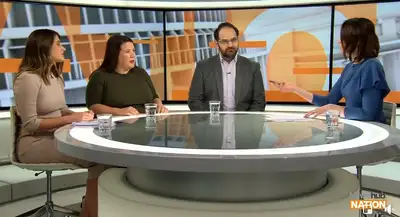
Newshub Nation: Budget Panel Discussion
Associate Professor of Economics Dr Matt Roskruge, Newshub’s Business Reporter Madison Reidy and Brigitte Morten from Franks Ogilvie Law dissect the news of the week with Tova O’Brien.
2021
'Business as usual' in Tāmaki as retail stores re-open, 9 November 2021, Te Ao Māori News
Is Labour's housing plan a 'Bob the Build Up' plan for Māori? 29 September 2021, Te Ao Māori News
Number of superannuitants earning over $200k triples in a decade, 2 September 2021, RNZ
Lockdown could be breaking point – economist, 19 August 2021, Te Ao Māori News
Budget 2021: Moving the dial on Māori housing, 21 May 2021, Stuff
Budget 2021: Benefit increases, rent reforms needed to tackle child poverty in New Zealand - experts, 19 May 2021, Stuff
Job upheaval looms in health reforms, but overall numbers seem steady, 24 April 2021, Stuff
Are minimum wage rises passed on to customers, as business groups claim? 18 April 2021, Stuff
Child poverty declines, but Māori, Pacific poverty rates 'profoundly disturbing', 23 February 2021, Stuff
Māori unemployment on the rise amidst Covid-19 lockdown, 15 February 2021, Te Ao Māori News
2020
Our Truth, Tā Mātou Pono: How our business reporting served and protected European settler interests, 2 December 2020, Stuff
Covid-19: Jobless and tempted to get into a franchise, what are the pitfalls? 15 November 2020, Stuff
Covid-19 has changed New Zealand forever. The experts explain how, 20 October 2020, The Spinoff
DHBs still operating under strain and in deficit under Labour, 12 October 2020, RNZ
Election 2020: DHB deficits still out of control, 12 October 2020, RNZ
Te Reo Maori app could influence standard rate for translations, 16 September 2020, Stuff
$64.2 million in WINZ food grants during lockdown quarter, 7 September 2020, Te Ao Māori News
Auckland Action Against Poverty calls for end to benefit sanctions, 3 September 2020, Te Ao Māori News
Coalition should have reformed welfare before Covid-19 outbreak – economist, 2 September 2020, Te Ao Māori News
It could be 2024 before some parts of the economy fully recover – economist, 28 August 2020, Te Ao Māori News
Economics lecturer says lack of people movement will hurt economy, 6 August 2020, Te Ao Māori News
Economists on unemployment number predictions, 5 August 2020, RNZ
The biggest spend up since Think Big is coming to Taranaki, 18 July 2020, Stuff
Māori tourism critical to country's economic rebuild, 1 July 2020, Te Ao Māori Nes
Māori economy critical to Covid-19 economic recovery, 30 June 2020, Stuff
Maori economy holds the key to helping Aotearoa recover, 30 June 2020, RNZ The Panel
Deep Trouble, 23 June 2020, Stuff investigation, Matt Roskruge features in:
Budget 2020: Māori to get $900m to deal with Covid-19 fallout, 14 May 2020, RNZ
Budget: Funding welcomed, but Māori business miss out, 14 May 2020, RNZ
Covid-19 impact on nurse wellbeing: Identification, sustainability and mitigation, 4 May 2020, AMRF
Could the economic recovery cause another Māori migration? 29 April 2020, Te Ao Māori News
Coronavirus: What the pandemic is costing small business, 25 April 2020, Stuff
Coronavirus: Māori economist says Māori workers will be hit hard, 23 March 2020, Stuff
Fears Covid-19 could cost Māori economy $500 million, 6 March 2020, RNZ
Māori @ Massey news
New research warns school lunch debate risks losing sight of children's wellbeing
New research from Te Kunenga ki Pūrehuroa Massey University that analyses media coverage of the Ka Ora, Ka Ako Healthy School Lunches Programme has found competing narratives around the initiative, with debate increasingly centred on cost rather than child wellbeing and equity.

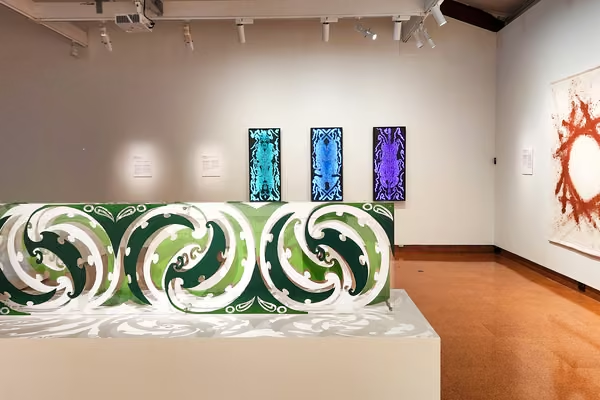
Celebrating 30 years of Toioho ki Āpiti: An exhibition that honours the legacy of Māori visual arts
An exhibition celebrating three decades of Māori artistic excellence, creativity and legacy will open on Te Kunenga ki Pūrehuroa Massey University’s Manawatū campus next week, marking 30 years of the iconic Toioho ki Āpiti: Bachelor of Māori Visual Arts programme.
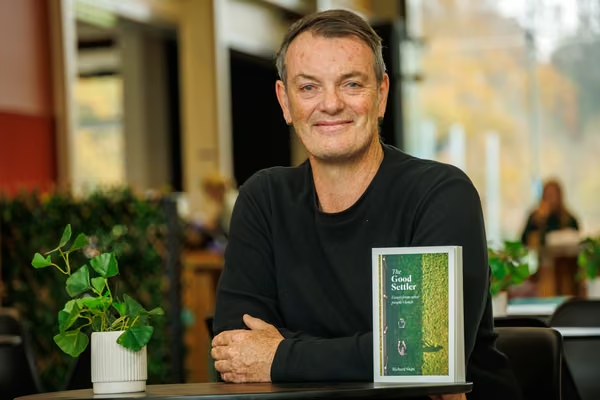
Your Family, your history: New book challenges kiwi narratives
Professor Richard Shaw is urging New Zealanders to reflect more deeply on their own family histories and their connection to colonisation, with the release of his latest book, 'The Good Settler – Essays from other people’s lands', recently published by Massey University Press.
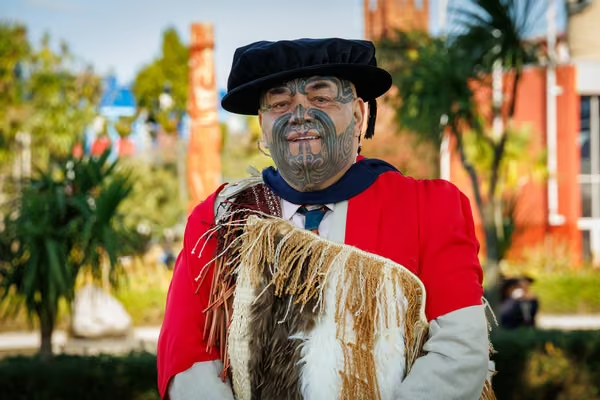
Weaving knowledge across generations: Manu Kawana awarded Honorary Doctorate
The Honorary Doctorate of Education awarded to Manu Kawana recognises his exceptional contribution to Māori education, cultural development and community wellbeing. The award honours a lifetime of service freely given in the pursuit of equity, understanding and transformative education for all.
Tono Mai – Contact
Contact Professor Matt Roskruge for all general and media enquiries.
Te Au Rangahau
- m.roskruge@massey.ac.nz
- Phone