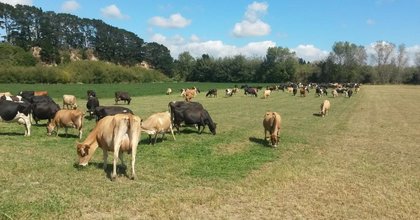
Dairy 1 is one of Massey's working farms. It borders the Manawatū River, within the Palmerston North city boundary.
Objectives
- To be managed as a profitable, low input, sustainable pasture-based dairy farm.
- To provide a teaching resource for undergraduate and postgraduate qualifications and be involved in research and extension of Once-a-Day seasonal supply low input system in a sensitive nutrient zone.
- To provide a link between the university and agribusiness.
Farm features
About the farm
Dairy 1 occupies land purchased from the Batchelar Estate for the establishment of Massey Agricultural College in 1926. A dairy herd was established in 1929 and is the basis of the present Dairy 1. The farm has changed over the years with the better Karapoti Brown Loam soils annexed by other organisations. Consequently, Dairy 1 now utilises the lighter river accretion soils adjacent to the Manawatū River. The farm has a history of winter milk over 50 years. In February 2004, almost 90 per cent of the farm was inundated by floodwaters leaving significant silt deposits after recession.
Location and map
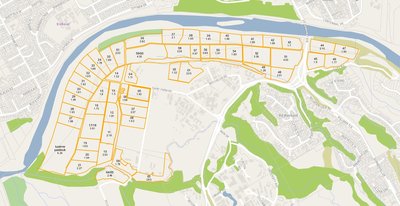
Dairy 1 is located adjacent to the Massey University campus, bounding the Manawatū River. Three kilometres from Palmerston North City.
The farm's 142 hectares is subdivided into approximately 65 x 1.9 hectare paddocks, all with race access.
Area
142.7 hectares.
Effective Area: 119.7 hectares.
Altitude
35 metres above sea level.
Rainfall
980mm (average annual rainfall).
1010mm rainfall for 2004/2005 season.
Temperature
An average of 7°C in July and 18.5°C in January (monthly 10cm soil temperature).
Soils
Free-draining alluvial soils. A complex association of river soils, including the following.
- Rangitikei Loamy Sand.
- Manawatū Fine Sandy Loam.
- Manawatū Sand Loam/Gravelly phase.
- Manawatū Mottled Silt Loam.
- Karapoti Brown Sandy Loam.
These soil types are well to excessively-well drained, prone to summer drought. High in natural fertility. Overlaying gravels are present, in some cases within 10cm of surface.
Irrigation
42.2 hectares of the farm is able to be irrigated. In the summer of 2024/2025 there was an increase in area and an upgrade of system to K-line pod system.
Drainage
Free draining.
Water supply
Massey University water supply, reticulated to all paddocks.
Staff
Two permanent staff on a 5:2 roster and casual staff as required.
Genetics and breeding
The long term plan for breed composition at Dairy 1 is to have a herd of 260 cows composed of roughly 86 Jerseys, 86 Friesians, 86 KiwiCross.
The Jerseys are mated to Jersey sires, Friesians to Friesian sire and the KiwiCross animals are mated to KiwiCross. Bulls are selected on the Once-a-Day selection index developed by LIC. A new culling decision index is now being developed for OAD milking using the data obtained from the cows at Dairy 1. Production (milkfat, protein and lactose yields per cow), productivity (milksolids/hectare) and efficiency (milksolids/kilogram of liveweight, milksolids/tonne of dry matter) are all being evaluated for the breeds.
Facilities
The milking facility is a 24-aside herringbone shed equipped with Delaval milking system. Halter & Allflex collars. The feed pad is concrete with a 280 cow capacity.
Other facilities include a:
- five-bay calf shed
- office
- storage room
- teaching room.
Pasture
Pastures are predominantly perennial ryegrass or white clover species. Pastures are renewed on a 10-year rotation.
Historically, Dairy 1 has grown 13.9t DM/ha/year, on average.
Grazing policies
Pasture-based production system aiming to achieve high levels of feed conversion efficiency through excellent grazing management.
The following stock are typically grazed off the farm:
- heifer calves
- yearling heifers
Supplements are used to extend lactation and buffer the effects of seasonal pasture growth.
Regrassing policy
Currently, 12-15 ha are re-grassed annually into perennial ryegrass/clover (grass-to-grass).
Fertiliser
Fertiliser programmes generally are different every year. In the past we have put on several strategic applications of nitrogen throughout the year (at application rates of 30-40 kg N/ha). The intention for the new system is for fertiliser to be looked into in more detail due to the farm location and change to farm system. Fertiliser is currently selected based on soil tests, plant demand and climate data.
Soil tests are done biannually and show the following results:
| Year | pH | Olsen P | SO4 | K | Mg |
|---|---|---|---|---|---|
| 2012 | 6.0 | 39 | 6 | 8 | 32 |
| 2010 | 5.7 | 38.7 | 9.7 | 5 | 27 |
| 2004 | 6.0 | 27.3 | 17.7 | 5 | 28 |
| 2002 | 5.8 | 44.1 | 5.6 | 5 | 27 |
| 2016 | 5.7 | 30 | 12 | 11 | 35 |
| 2018 | 6.0 | 33 | 11 | 10 | 30 |
| 2020 | 5.9 | 26 | 16.8 | 7 | 31 |
| 2022 | 6.0 | 44 | 7.7 | 12.4 | 32 |
| 2024 | 6.1 | 44 | 12.1 | 13.5 | 30 |
Crops and supplements
10 hectares of Lucerne and 10 hectares of chicory, plantain red and white clover mix have been planted.
Maize silage, grass silage and baleage are purchased according to seasonal requirements. Hay is fed to dry stock when needed. Other mineral supplementation bought in as required.
The intention is to grow all supplement on farm.
Stocking rate and production
| 2018/19 | 2019/20 | 2020/21 | 2021/22 | 2022/23 | 2023/24 | 2024/25 | |
|---|---|---|---|---|---|---|---|
| Total Milksolids Supplied (kg) | 77,496 | 91,004 | 99,334 | 97,397 | 88,319 | 86,725 | 79,614 |
| Total litres supplied (L) | 825,233 | 964,176 | 1,052,676 | 1,012,494 | 911,991 | 882,865 | 882,865 |
| Cows Milked (Peak) | 242 | 261 | 262 | 259 | 259 | 239 | 246 |
| Stocking Rate (cows/ha) | 2.0 | 2.2 | 2.2 | 2.2 | 2.2 | 2.0 | 2.1 |
| Milk Production (kg MS/cow) | 320 | 349 | 379 | 376 | 341 | 363 | 324 |
| Milk Production (kg MS/ha) | 648 | 761 | 831 | 814 | 738 | 725 | 666 |
Mating
Planned start of mating is mid-October for 9 weeks. Artificial breeding only.
| 2018/19 | 2019/20 | 2020/21 | 2021/22 | 2022/23 | 2023/24 | 2024/25 | |
|---|---|---|---|---|---|---|---|
| Repro 6 week | 79% | 77% | 74% | 74% | 74% | 73% | 80% |
| Repro empty | 9.0% | 9% | 13% | 11% | 20% | 14% | 13% |
| Mating AB (weeks) | 10 | 10 | 10 | 11 | 9 | 10 | 9.5 |
| Mating natural (weeks) | 0 | 0 | 0 | 0 | 0 | 0 | 0 |
| Total weeks mating | 10 | 10 | 10 | 11 | 9 | 10 | 9.5 |
Our people
Dairy 1 is managed by Tristan Bates.

Research
We have a number of research projects currently underway at Dairy Farm 1.
Whenua Haumanu
In 2013, Dairy 1 farm switched to Once-a-Day (OAD) milking, spring calving system. 260 cows are milked OAD for 300 days. The genetics of the herd are being accessed and evaluated with help from LIC to enhance selection for OAD traits.
Dairy1 has now been enrolled in the Whenua Haumanu project. Led by Massey University, Whenua Haumanu is the cornerstone of MPI’s portfolio of regenerative agriculture projects. It's New Zealand's most comprehensive programme on the effects of contemporary and regenerative pastoral practices.
This 7-year project brings together universities, Crown Research Institutes and industry partners to assess the suitability and relevance of regenerative agriculture in New Zealand.
Whenua Haumanu measures multiple aspects throughout the farm system, exploring how different pasture mixes and management practices impact:
- soil biology, diversity and structure
- soil chemical and physical properties
- pasture growth, quality and persistence
- nutrient leaching
- methane and nitrous oxide emissions
- carbon capture and storage
- animal production, health and welfare
- quality of milk, meat and wool products.
Massey researchers are exploring contemporary and regenerative farming practices across both standard and diverse pastures on several research sites at Massey University and Lincoln University. This project is also linked to a number of other sites where related projects on diverse pastures or regenerative farming practices are being explored.
Competitive and responsible dairying
Massey University is working with farmers and industry to find the best solutions for competitive and responsible dairying in a sensitive New Zealand river catchment.
We have research programmes underway particularly to benchmark the initial phase of this project. Several more programmes of research are planned.
Sustainable farming
For this trial the 9 main points of sustainable farming are taken as being to:
- have a profitable farm business
- manage soils for the future with less dependence on fertilizers, and to build soil organic matter in order to increase soil carbon levels
- reduce energy consumption by reducing demand and generating on-farm energy supply
- better manage water (conserve and reduce use), and reduce pollutant losses
- have sustainable people management practices
- increase the biodiversity on the farm
- develop long-term business communication strategies not only with buyers, but with the professional support teams and the local community
- lower the carbon footprint of milk production
- improve dairy cow welfare, fertility and animal health.
The gross composition, fatty acid profile and the processability of milk from cows milked once- and twice-a-day
Professor Nicolas Lopez-Villalobos and student, Inthujaa Sanjayaranj
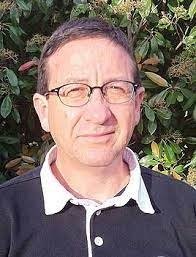
Professor Nicolas Lopez-Villalobos
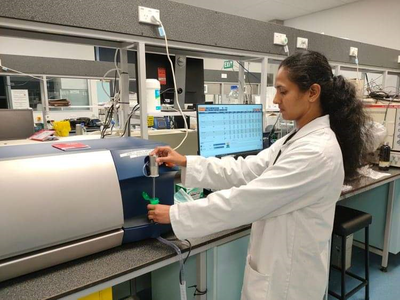
Inthujaa Sanjayaranj
The aim of the research is to study the effect of once-a-day (Dairy 1) and twice-a-day (Dairy 4) milking on the gross composition, fatty acid composition and processability of milk with the interaction of breed, parity and stages of lactation.
The research will provide better understanding of fatty acid composition of milk and its influence on butter hardness and coagulation properties. This research will also study the suitability of milk from Holstein-Friesian, Holstein-Friesian Jersey cross-bred and Jersey cows milked OAD for butter and cheese making.
The impact of milking once and twice a day on the physicochemical properties of milk
Marit Van der Zeijden

Compositional and physio-chemical properties of milk are important factors in determining final product quality after processing.
The aim of this research is to obtain a better understanding of the variation in gross composition, protein composition and functionality of milk from once and twice-a-day milked cows.
This research is funded through the Ministry of Business, Innovation and Employment (MBIE- funded New Zealand Milks Mean More (NZ3M) programme and the Riddet Institute.
Long-term effect of a OAD selection index on productive and reproductive performance of dairy cows milked once-a-day
Contact Nicolas Lopez-Villalobos
Assessment of transport and transformation of nitrogen in the subsurface environment
History
The land on the south bank of the Manawatū River where Massey’s Dairy 1 is located was originally occupied by the Rangitāne people. Māori settlers, attracted by the fertile soils of the Manawatū floodplain, cleared some of the forest for growing kumara and established small unfortified villages (kainga) along the river. Although it is likely that there were a number of settlements in this area, only one village, Mokomoko, is recorded.
Prior to European settlement a large stand of karaka trees grew on the area of flat land between the present FitzHerbert Bridge and the mouth of the Turitea Stream and were an important food source for Māori. A remnant of the karaka grove is located adjacent to the Dairy 1 is a culturally significant site, providing a physical and spiritual link with the Māori history of the land.
In 1926 the farm of John Batchelar was purchased by the government for the site of the Massey Agricultural College which later became Massey University.
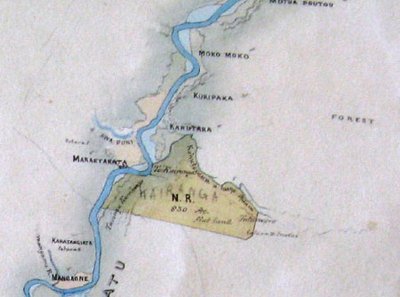
Original survey map by J.T. Stewart.
Visit a farm or request research and teaching services
Contact Massey Agricultural and Horticultural Enterprises (MAHE) with questions or to visit a farm. You can also request teaching or research.
More information
For further information please email us at: agstation@massey.ac.nz
Related content