Our research helps local and global communities understand and respond to diverse challenges in areas such as sustainability, security, built environments and social equality.
Research groups

Centre for Defence and Security Studies (CDSS)
CDSS is advancing the security of Aotearoa, the Asia-Pacific region and the world through its multidisciplinary research and New Zealand's only specialist education in defence and security studies.
HOPE Collective
The HOPE Collective is an interdisciplinary research collective exploring hope and hopeful teaching in higher education to reimagine university learning as a space for transformation.
Reimagining South Pacific tourism post-pandemic
Reimagining South Pacific tourism post-pandemic seeks to put the South Pacific at the forefront of developing tourism that benefits both people and the planet. The knowledge from this project will support Indigenous development through tourism in the fut
Researching Postcapitalist Possibilities
The 'Transitioning to caring economies through transformative community investment' project explores how economies can prioritise people, culture and the environment over profit.
Highlighted research
Explore a selection of research projects, including 2 awarded grants from the Marsden Fund Te Pūtea Rangahau.
Farm Next Door local food study
Farm Next Door local food study
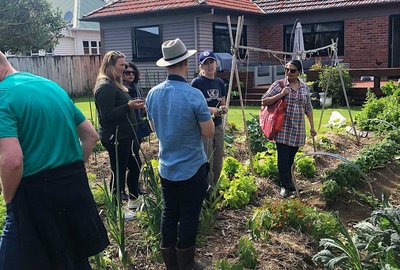
Associate Professor Sita Venkateswar
Massey researchers have been part of a Taranaki initiative, Farm Next Door, to collaborate with small-scale growers who farm sustainably, organically or regeneratively to earn money and supply produce for the community. The project aims to better understand this growing movement and shift mindsets around food production.
HOPE in Higher Education
HOPE in Higher Education
There is increasing focus on climate anxiety, despair and hopelessness among university students. Less work has been done to understand how teachers embed hope in learning environments. Hope in Higher Education is a research project that aims to explore hope-based pedagogies.
Research team members
Dr Alice Beban, Associate Professor Elaine Khoo, Dr Clare Mouat and Lisa Vonk.
Pacific projects on COVID and climate change
Pacific projects on COVID and climate change
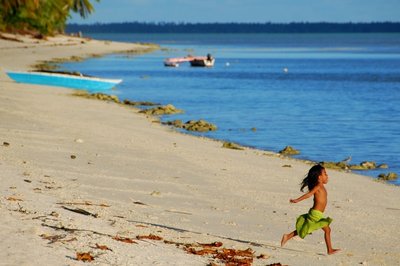
Re-imagining South Pacific tourism
This project explores how indigenous people in tourism have been affected by COVID-19, and how they have responded. It investigates how tourism can be re-imagined in more sustainable and equitable ways by building on indigenous knowledge.
Reimagining South Pacific tourism post-pandemic
Understanding change in the Pacific from the inside
Professor Glenn Banks
Climate refugees and disappearing islands loom large in predictions of Pacific futures. But local knowledge has been marginalised in academic and policy discussions. This research, led by palagi and Pacific researchers, will produce a co-constructed understanding of change.
Reduce, reuse, repair
Reduce, reuse, repair New kinds of waste-conscious initiatives in circular and postcapitalist economies
Professor Kelly Dombroski, Dr Lila Laird
Conventional approaches to researching waste reduction try to get individuals to change their attitudes and behaviours, often focusing on actions like recycling. But this approach frequently fails to reduce waste, as most of us have little ability to change the wider systems that create waste in the first place. Instead of focusing on individuals, this research project asks how people act together to reduce waste and bring about collective change. How does involvement in community waste-reduction organisations affect people’s everyday habits and relationships? And how can people act together to create widespread social change that stops objects and materials from becoming waste in the first place?
The World Values Survey in New Zealand
The World Values Survey in New Zealand
Principal Investigator: Paul Perry, Sociologist and Honorary Research Associate in the School of People, Environment and Planning
The World Values Survey is a unique international social science project that has seen representative sample surveys undertaken roughly every 5 years, using a common and very extensive questionnaire containing hundreds of items, in anywhere from roughly 50 to 80 different countries in any 1 wave. New Zealand, via Massey University, has been part of this project since 1985, completing the latest wave in late 2019.
New Zealand has completed 6 waves through Massey University.
The questionnaire covers hundreds of items seeking people’s attitudes and values about things such as politics and government, religion, work, the environment, gender roles, community participation, the Treaty, life satisfaction and more. This allows us to see how people’s views have been changing over time since the 1980s, as well as comparing the values and attitudes of people in different countries.
For a general overview, visit the World Values Survey website
Transitioning to caring economies through transformative community investment
Transitioning to caring economies through transformative community investment
Professor Kelly Dombroski, Swarnima Kriti, Kelsi Henderson, Daena Moller
Since 2022, the 'Transitioning to Caring Economies' project has combined community‑based research with theoretical development to advance new ways of understanding how economies can prioritise people, culture and the environment over profit. Working with community organisations in Porirua, India and Horowhenua, the project examines how collective investments of time, energy, and resources shape more caring and sustainable forms of economic life. As a Rutherford Discovery Fellowship, the project has also supported the development of research leadership by building new theory from these partnerships, reshaping how economic change is understood and practised in Aotearoa New Zealand.
Learn more on the project's website Researching Postcapitalist Possibilities
Books enabled by this project
- Caring for life: A postdevelopment politics of infant hygiene
- Transitions in Action: An urban field guide to Te Upoko o Te Ika Wellington
This project is funded by the Royal Society of New Zealand Rutherford Discovery Fellowship
Research themes
Political and cultural economy
Political and cultural economy
Critical approaches to the study of economic regions, industries, markets and networks, including:
- care economies
- consumption and de-accumulation
- decolonial approaches to political economy/ecology
- food, wine, and dairy
- markets for data, knowledge, and expertise
- postcapitalist political economy
- regional government
- unions and activism.
Resilience, adaptation and sustainability
Resilience, adaptation and sustainability
Our research aims to build more resilient communities and economies and help businesses develop environmentally friendly production systems.
Focus areas include:
- circular economies and zero waste
- climate change and plastic pollution
- decolonisation, planning and development
- regenerative farming and sustainable land use
- sport and development
- tourism
- transportation and mobility
- the United Nations' Sustainable Development Goals.
Security, politics and development
Security, politics and development
The nexus of security, politics and development, especially in the Asia-Pacific.
Focus areas include:
- cultural politics
- fragile environments
- international relations
- political change and the state
- post-conflict peace support and development programmes
- security sector development and governance
- countering terrorism and violent extremism.
Find out about Massey's Centre for Defence and Security Studies
Social identity and inequality
Social identity and inequality
Research into how group identities are created and how unequal relationships develop between groups in society.
Focus areas include:
- ageing in Aotearoa New Zealand
- ethnicity, identity and nationhood
- family policy, work-life balance and changing employment patterns
- housing and identity
- rituals and religions
Related content