Selected projects
Explore some of our recent research projects, including 2 awarded grants from the Marsden Fund Te Pūtea Rangahau.
HOPE Collective
HOPE Collective
The HOPE Collective is an interdisciplinary research collective exploring hope and hopeful teaching in higher education to reimagine university learning as a space for transformation.
Research team members
Dr Alice Beban, Associate Professor Elaine Khoo, Dr Clare Mouat and Lisa Vonk.
Pacific projects on COVID and climate change
Pacific projects on COVID and climate change
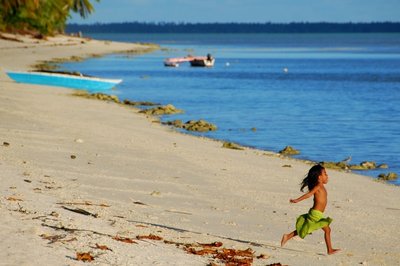
Re-imagining South Pacific tourism
This project explores how indigenous people in tourism have been affected by COVID-19, and how they have responded. It investigates how tourism can be re-imagined in more sustainable and equitable ways by building on indigenous knowledge.
Reimagining South Pacific tourism post-pandemic
Understanding change in the Pacific from the inside
Professor Glenn Banks
Climate refugees and disappearing islands loom large in predictions of Pacific futures. But local knowledge has been marginalised in academic and policy discussions. This research, led by palagi and Pacific researchers, will produce a co-constructed understanding of change.
Rebalancing the New Zealand Army
Rebalancing the New Zealand Army

Professor Bethan Greener, Dr Nina Harding, Major Amy Brosnan (Massey University), Professor Megan Mackenzie (Simon Fraser University, Canada), Dr Kate Lewis (Newcastle University, UK)
This project is systematically examining how gender operates within the army — including gendered ideal types, stereotypes, and gendered expectations. It will theorise about how militaries might be ‘regendered’ and will help the army to become a more inclusive and effective institution.
The project began in 2020 and runs through 2023. It uses surveys, questionnaires, interviews and observation to collect data for coding and analysis.
Markets in their place
Markets in their place
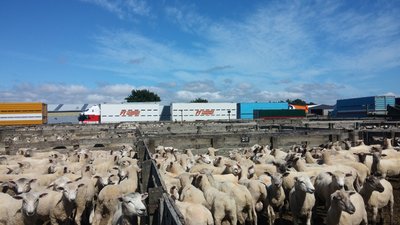
Associate Professor Russell Prince, Associate Professor Matt Henry, Dr Carolyn Morris, Dr Aisling Gallagher
Markets are usually discussed in abstract terms. But they operate, succeed and fail in specific places. How do markets and places shape each other?
Massey staff are collaborating with colleagues from around New Zealand to explore this growing area of research. The project brings together geographers, sociologists and anthropologists, studying markets selling goods as diverse as livestock, apples, childcare, data and Māori potatoes.
Books published from this research
Markets in their Place: Context, Culture, Finance
Childcare Provision in Neoliberal Times: The Marketization of Care
Farm Next Door local food study
Farm Next Door local food study
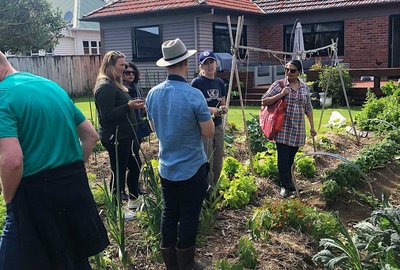
Associate Professor Sita Venkateswar
Massey researchers have been part of a Taranaki initiative, Farm Next Door, to collaborate with small-scale growers who farm sustainably, organically or regeneratively to earn money and supply produce for the community. The project aims to better understand this growing movement and shift mindsets around food production.
Building a place-based social license to operate
Building a place-based social license to operate
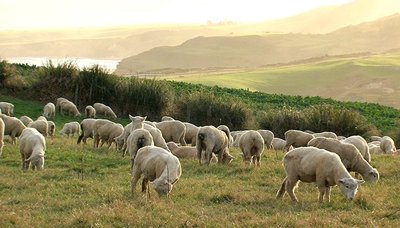
Dr Cadey Korson, Dr Alice Beban, Professor Jonathan Procter, Dr Janet Reid
The phrase ‘social license to operate’ sometimes refers to communities’ acceptance of primary industries in their regions.
If New Zealanders are to take a more environmentally responsible approach to farming, we need to build on the shared perspectives in our diverse communities. This project aims to develop new tools for connecting producers and consumers, by better-understanding perceptions of farming and food production. It will include surveys of iwi and other stakeholders and will generate articles, graphics and a mini-documentary.
Funded by the Our Land and Water National Science Challenge/Toitū te Whenua, Toiora te Wai.
Research themes
Resilience, adaptation and sustainability
Our research aims to build more resilient communities and economies and help businesses develop environmentally friendly production systems.
Focus areas include:
- climate change and plastic pollution
- decolonisation, planning and development
- regenerative farming and sustainable land use
- sport and development
- tourism
- transportation and mobility
- the United Nations' Sustainable Development Goals.
Learn more about Massey's sustainability research
Security, politics and development
The nexus of security, politics and development, especially in the Asia-Pacific.
Focus areas include:
- cultural politics
- fragile environments
- international relations
- political change and the state
- post-conflict peace support and development programmes
- security sector development and governance
- countering terrorism and violent extremism.
Find out about Massey's Centre for Defence and Security Studies
Political and cultural economy
Critical approaches to the study of economic regions, industries, markets and networks, including:
- care markets
- consumption and de-accumulation
- food, wine, and dairy
- markets for data, knowledge, and expertise
- regional government
- unions and activism.
Social identity and inequality
Research into how group identities are created, and how unequal relationships develop between groups in society. Focus areas include:
- ageing in Aotearoa New Zealand
- ethnicity, identity, and nationhood
- housing and identity.
- religion.
Related content