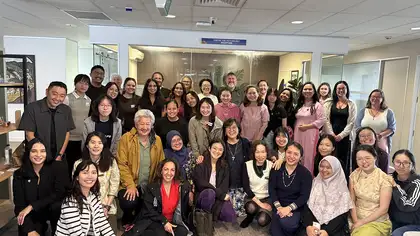
Promoting Asian Psychologies in Aotearoa New Zealand
The event ‘Promoting Asian Psychologies in Aotearoa New Zealand’ was a resounding success. It was hosted by Massey University, University of Auckland and the Asian Association of Social Psychology. Members presented work and got constructive feedback. There were deep discussions about advancing Asian psychologies in Aotearoa. People collaborated and built networks.
We look forward to future events.
What we do
The Enhancing Participation and Inclusive Change (EPIC) Collective aims to:
- function as a community of scholars seeking to contribute to a socially and psychologically healthier society
- be of service to aligned communities, organisations and society
- develop, share and apply knowledge as a collective
- engage in participative research with various marginalised persons and communities
- support the sustainability of communities and services
- support the development of emerging applied scholars
- pursue excellence in teaching at undergraduate and graduate levels.
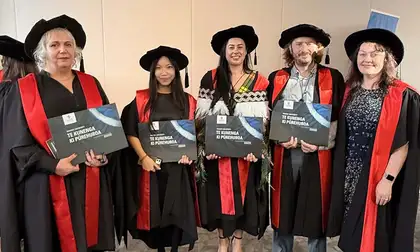
Dynamic four graduate with flying colours!
Members of the EPIC Collective graduate in Tāmaki Makaurau Auckland.
Left to right: Dr Megan Young, Dr Sarah Choi, Dr Ahnya Martin and Dr Matthew Kean – the dynamic four, with Associate Professor Kirsty Ross , Head of School at Massey's School of Psychology.
Thesis completions
Experiences of Precarity for Māori in Aotearoa NZ
Experiences of Precarity for Māori in Aotearoa NZ Ahnya Martin
My PhD research explored the lived experiences of precarity with 10 low-income households in Aotearoa New Zealand. Investigating multifaceted insecurities experienced by the precariat across precarious employment, housing, food and so forth. This was combined with an exploration of the consequences of recent policy initiatives implemented to alleviate such insecurities. The findings illustrate how precarity is complex and relational, and as such, policy initiatives should be informed by relational understandings of precarious lifeworlds.
Supervisors: Professor Darrin Hodgetts, Dr Pita King and Associate Professor Denise Blake
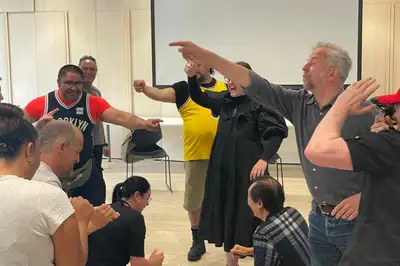
Theatre workshop on precarity for Māori
A theatre workshop led by UK Theatre Director Adrian Jackson with members of the HRC project and Hobson Street Theatre Company. Ahnya kneels on the floor as the group engages in some theatre exercises.
Historical narratives and representations...
Historical narratives and representations... Sarah Choi
Historical narratives and representations: Implications for political culture and national identity
A mixed method investigation of historical narratives and representations within and across cultural contexts: Implications for political culture and national identity
Sarah’s thesis explored how people collectively remember historical events from their nation’s past through social representations and narratives. Most interestingly, the thesis demonstrated how these meaning-making processes about the past are fluid and dynamically reactive to situations unfolding in the present context.
Supervisors: Professor James Liu, Dr Veronica Hopner, Professor Michael Belgrave

Sarah Choi
Merry-Go-Sorry: An Autoethnography of Chronic Illness
Merry-Go-Sorry: An Autoethnography of Chronic Illness Megan Young
Merry-Go-Sorry is an investigation into the complexities of chronic pain and illness as a lived experience, using creative writing and arts-based methodologies to create and share embodied knowledge. This research deepens the understanding of chronic illness as a disruptive and disrupting experience, in contrast with the social narratives that seek to control and cure the uncontrollable and incurable.
Supervisors: Emeritus Professor Kerry Chamberlain, Dr Veronica Hopner
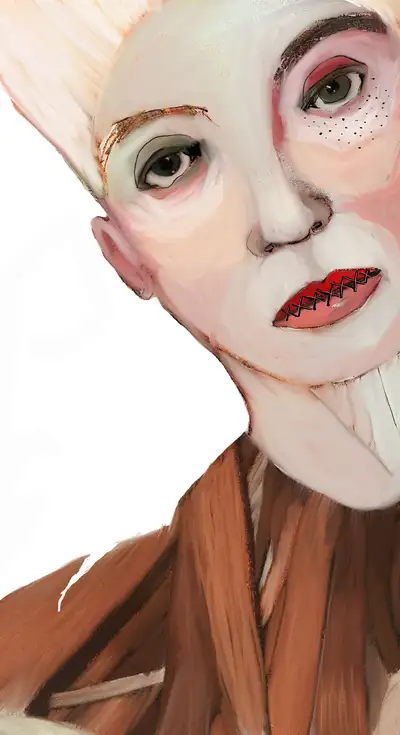
Disenfranchised Grief, by Megan Young
This artwork represents the pain, the sadness and the silencing of Megan's disabled body. It was created by combining painting and collage to evoke a synecdochic strangeness in provocation to societal norms.
Who we are
Members of the EPIC Collective come from universities across Aotearoa New Zealand.


Associate Professor Clifford Van Ommen



Associate Professor Ian de Terte


Dr Robyn Vertongen

Nuke Martiarini
PhD projects
Precarity and the Justice System
Precarity and the Justice System EPIC member involved: Kim Finkler
Precarity and the Justice System: The Case of a Community Law Centre in the 'Heart of Ngāpuhi'
My interdisciplinary research project explores the lifeworlds of people caught in the nexus of poverty and the justice system in Kaikohe, a low socio-economic, rural Māori community in the Far North. Grounded in Kaupapa Māori principles, the project takes a collaborative, community-based approach to understand how structural inequalities intersect with personal resilience. As a case study of Kaikohe’s Community Law Centre, this research aims to amplify unheard voices, reveal strategies for wellbeing and inform practical solutions for systemic change. Ultimately, my project seeks to drive transformative justice and equity for Māori locally and nationally.
Supervisors
Dr Pita King (Primary supervisor)
Professor Darrin Hodgetts (Co-supervisor)
Dr Shemana Cassim (Co-supervisor)
Investigating the relationship between mindfulness, solitude and wellbeing
Investigating the relationship between mindfulness, solitude and wellbeing EPIC member involved: Kamla Waila
My PhD research explores the relationship between mindfulness and positive solitude using a mixed-method approach, drawing on Eastern philosophies and contemporary psychological literature. Combining both qualitative and quantitative methods, it aims to deepen our understanding of how mindfulness practices can enhance the experience of being alone in beneficial ways, promoting psychological well-being and personal growth.
Supervisors
Associate Professor Heather Kempton
Dr Nicole Lindsay
Associate Professor Rosie Gibson
Exploring sustainable dentistry through participatory action research
Exploring sustainable dentistry through participatory action research EPIC member involved: Christina He
Sustainable dentistry is an emerging practice that has the potential to benefit the global wellbeing regarding the environment, economy and societies. My thesis collaborates with self-transformed dental organisations to document workable options for the industry.
Supervisors:
Professor Darrin Hodgetts (Primary supervisor, Massey University)
Dr Minh Nguyen (Co-supervisor, Massey University)
Dr Shiloh Groot (Co-supervisor, University of Auckland)
Mr Heuiwon Han (Co-supervisor, Auckland University of Technology)
Echoes of silence: unravelling enforced disappearances and reconciliation
Echoes of silence: unravelling enforced disappearances and reconciliation EPIC member involved: Indeewari K. Galagama
My study examines how survivor families experience and transmit trauma across generations, particularly how loss, absence and memory shape identity, political participation and everyday life. I use frameworks of forensic citizenship, political repression, post-memory, and transgenerational trauma to understand these dynamics. I'm combining archives, expert interviews and in-depth narratives from affected families.
Supervisors:
Dr Shine Choi
Associate Professor Sita Venkateswar
Dr Shemana Cassim
Research projects
Our home/their property: The renter’s life project
Our home/their property: The renter’s life project EPIC member involved: Clifford van Ommen
Our lives are deeply shaped by the places in which we live. Housing has however become a fundamental aspect of financialisation meaning that it is regarded as primarily a form of investment (emphasising its exchange value) rather than a home (a dwelling’s use value) or social right. A consequence of a process of deregulation, low taxation and low inflation is the significant concentration of wealth in property and the rise of housing unaffordability. House prices and social housing underinvestment have forced many, particularly impoverished households, into a private rental market characterised by unaffordability, unavailability, rental quality issues and tenant insecurity. This impacts especially low-income households, single-parent families, beneficiaries, pensioners and Māori and Pacific Peoples households.
This project aims to document, theorise and address the social practices and power relations that shape tenant-landlord relationships, including mapping their intergenerational consequences materially, socially and psychologically. It is only through a multi-faceted exploration of the realities, rhetoric, practices and political economies surrounding the landlord-tenant relationship that we might truly understand 'a renter’s life'!
Project Salaam
Project Salaam EPIC members involved: Shemana Cassim and Darrin Hodgetts
Project Salaam was set up by a community of activist women in 2018, who aimed to work with former refugee Muslim youth to grow leadership and skills in conflict resolution through a series of experiential workshops facilitated in 2 Auckland high schools. The project team invited Darrin, Veronica and Shemana to carry out an evaluation of Project Salaam in 2022. This evaluation involved working with the Muslim community in Mount Roskill to document the impacts of Project Salaam for supporting former refugee Muslim youth in strengthening their leadership abilities, self-confidence, academic engagement and achievement, and also promoting wellbeing and inclusion within educational institutions and in their community.
Culturally Respectful Guidelines for Working with Ethnic Communities
Culturally Respectful Guidelines for Working with Ethnic Communities EPIC member involved: Shemana Cassim
This is a community based, community-led project where Shemana worked alongside Diversity Counselling New Zealand and the communities this organisation serves to co-design a series of Guidelines for practice, for counsellors working with ethnic communities. The project was conceptualised to help ensure that mental health services are accessible and effective for former refugees and migrants from ethnic communities in Aotearoa New Zealand. The Guidelines can also be used broadly by (mental)health practitioners working with ethnic migrant communities. The Guidelines and final project report can be accessed on the Diversity Counselling New Zealand website.
Culturally Respectful Guidelines for Working with Ethnic Communities
Spirituality in Health Services
Spirituality in Health Services EPIC member involved: Heather Kempton
This project involves the integration of spirituality in health services, for example, psychology and social work, with an article currently being written by Heather and Julia Stewart (former master's student) on 'Spirituality and psychology: how psychologists bridge the gap', with a comparison between psychology and social work to follow involving Julia's work as well as former PhD student, Hairunissa Sedhik, co-supervisor Ksenija Napan, School of Social Work and Associate Professor Richard Egan, University of Otago, Department of Preventative and Social Medicine.
Men’s Work: Narratives of engaging with change and becoming non-violent
Men’s Work: Narratives of engaging with change and becoming non-violent Epic member involved: Matthew Kean
Despite years of legislative efforts, policy actions and public campaigns, family violence continues to be a harsh reality for many families, whānau and communities around New Zealand. In partnership with Gandhi Nivas, a community-oriented organisation providing early intervention support services to families in the Auckland region, I collaborate with men addressing their use of violence, to bring to the fore new possibilities for the violence prevention sector by linking theory and community practices empowering non-normative processes of change towards non-violence. Informed with the philosophies of Gilles Deleuze and Felix Guattari, I provide an autoethnographic analysis of fieldwork experiences, 1:1 interviews, a weekly men’s social support group and my own experiences of violence and professional practices inherited from the health and criminal justice sectors, expanding on Rosi Braidotti’s nomadic theory to privilege affective memories of socio-cultural forces conditioning men’s every day social worlds.
With narratives a form of re-remembering sticky networks of felt experiences and embodied memories, I experiment with nomadic subjectivity as a cartographic methodology capable of weaving together a mosaic of affective connections with men and my resistance to such connections, enabling me to reflexively analyse what experiences follow me, what social processes I have articulated and what processes are left off the page.
Supervisors: Professor Mandy Morgan, Associate Professor Leigh Coombs and Dr Ann Rogerson.
Place & Climate Resilience in Vietnam
Place & Climate Resilience in Vietnam EPIC members involved: Minh Hieu Nguyen and Darrin Hodgetts
This is a collaboration project between EPIC and VAP (Vietnam Association of Psychology). The project aims to explore how communities in flood-prone areas adapt to and manage the challenges posed by climate change. Through observations and interviews with local residents and authorities, we seek to understand how cultural practices and community resilience contribute to sustainable livelihoods in the face of an increasingly unpredictable environment.
The role of regional consumer ethnocentrism and social identity...
The role of regional consumer ethnocentrism and social identity... EPIC members involved: Minh Hieu and Jony Yulianto
The role of regional consumer ethnocentrism and social identity in shaping customer behavior
The project on regional consumer ethnocentrism, social identity, and the purchase of traditional food is part of a larger initiative exploring the lived experiences of Javanese nasi pecel vendors in Mataraman cities, East Java, Indonesia. Funded by the Ministry of Higher Education of Indonesia in 2023, this research involves Dr Minh Hieu and Dr Jony Yulianto, who analyse preliminary survey data from nasi pecel customers in 4 cities across East Java. The study examines customers’ daily experiences of purchasing nasi pecel from various vendors and investigates how regional consumer ethnocentrism and town-oriented social identity (identitas kewargakotaan) influence their intention to buy nasi pecel within their own home cities.
Te taiao – the natural environment, kaitiakitanga and social wellbeing
Te taiao – the natural environment, kaitiakitanga and social wellbeing EPIC member involved: Pita King
To realise the social wellbeing of Māori, the cultivation and continuation of Māori social practices associated with kaitiakitanga are of central importance. This is because the social wellbeing of Māori is intimately tied to our relationships with te taiao. Through participating in kiwi catching training wānanga, we both seek to re-member (practical rejoining of tradition) some of this knowledge simply through the ‘doing’, as well as indigenising the kiwi recovery space. Doing so brings a different way of conceptualising the kinds of systems at play here. For example, within this project of research, the notion of community is extended to include non-human entities, such as animals, plants and the whenua (land) itself, to reflect a more Māori way of thinking about the world we inhabit and share. In essence, this project speaks to the notion of how we might sit together as Te Aitanga-a-Tane and cultivate a sense of social well-being that emerges from these broader networks of connections. Viewing our communities as inherently interdependent with te taiao (the natural environment) and in partnership with our non-human whanaunga (relatives) highlights the importance and urgency in re-claiming, re-membering, and further developing/adapting Māori knowledge and social practices that foster our shared social wellbeing in modern times.
Comparing Self-initiated overload and organisational-initiated overload ...
Comparing Self-initiated overload and organisational-initiated overload ... EPIC member involved: Michelle Lee
Comparing Self-initiated overload and organisational-initiated overload on work engagement: The mediating role of external job resources
One wonders if demands from oneself and the organisation help in work engagement. We extend the job-demands resources theory by incorporating self-initiated overload and a personal social capital perspective.
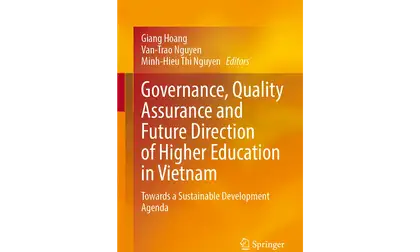
Governance, Quality Assurance & Future Direction of Higher Education in Vietnam
This book critically examines the dynamics of higher education in Vietnam within the context of global shifts, challenging the prevailing dichotomy of Global North and Global South. Focusing on the unique case of Vietnam, a nation shaped by diverse educational influences, the text investigates the country's higher education (HE) landscape, marked by a convergence of Eastern and Western ideologies.
Study with us
Discover the courses members of the EPIC Collective teach at Massey.
Applied Social Psychology – 175725
Social Psychology – 175201
Psychological Research: Principles of Design – 175738
Publications and media
Books
Books
Governance, Quality Assurance and Future Direction of Higher Education in Vietnam: Towards a Sustainable Development Agenda. Editors: Giang Hoang, Van-Trao Nguyen, Minh-Hieu Thi Nguyen. https://link.springer.com/book/9789819544004
Kempton, H. (in press). Finger pointing at the moon: Mindfulness through science and verse. Routledge.
SC. Carr, V. Hopner, DJ. Hodgetts, & M. Young (Eds.) Tackling Precarious Work: Toward Sustainable Livelihoods. (pp. 1 - 26). New York, United States of America: Routledge
Terruhn, J., & Cassim, S. (2023). Transforming the Politics of Mobility and Migration in Aotearoa New Zealand. Anthem Press.
Book chapters
Book chapters
de Terte, I., (2026). Protecting Those who Protect us: The Impact of Potentially Traumatic Events on Police Officers. In J. F. Albrecht & G. den Heyer (Eds.), Special Topics in Policing: Critical Issues and Global Perspectives (pp. xx-xx).
Liu, J. H. & Choi, S. Y. (2026). Collective memory and social representations of history. In A. Erll & W. Hirst (Eds.), Cognition, Culture, and Political Momentum: Breaking Down the Silos in Collective Memory Research. Oxford University Press.
Cassim, S., Hodgetts, D., Hopner, V., Khan-Janif, J. & Ali, N. (2025). Praxis and human rights in community engaged psychology: The role of the scribe in the case of Project Salaam. In M. MacLachlan, B. Kelly & I. Ebuenyi (Eds.), Human rights and wrongs in psychology and psychiatry. Oxford University Press.
Martin, A., Hodgetts, D., Groot, S., King, P., Blake, D. (2025). Engaging Māori Precariat Households to Make a Difference: Kaupapa Māori Praxis. In: Gough, B. (eds) The Palgrave Handbook of Critical Social Psychology. Palgrave Macmillan, Cham. https://doi.org/10.1007/978-3-031-80533-2_34
Cassim, S. (2023). Permanent Temporariness – The current landscape of migration and work?. In Tackling Precarious Work: Toward Sustainable Livelihoods. (pp. 493-515).
Cassim, S., Khan-Janif, J., & Martiarini, N. (2023). Building enduring relationships for a shared sense of belonging: Culturally derived solidarities between Muslim migrants and Māori. In Transforming the Politics of Mobility and Migration in Aotearoa New Zealand. (pp. 157-172).
Martin, A., King, P., & Hodgetts, D. (2021). Welfare in the media: Issues of coloniality and symbolic power in the case of Metiria Turei. In S. L. Borden, The Routledge companion to media and poverty (pp. 310-320). Routledge, 2021.
Journal articles
Journal articles
Choi, S. Y., Zhang, R. J., Valdes, E., Xie, T., Lee, I. C., Leung, A. K. Y, Lee, M., … & You, J. (2025). A cross-cultural investigation of the effects of individual privilege, group identification, and societal perceptions on global consciousness. Asian Journal of Social Psychology.
Fien, S., Lawes, J., Ledger, J., de Terte, I., Drummond, M., Simon, P., Joseph, N., Daw, S., Kelly, S., Hillman, W., Stanton, R., & Best, T. (2025). Exposure to Traumatic Events and Shame in Adolescent Surf Lifesavers: An Australian Perspective. Journal of Child and Adolescent Trauma, 18, 127-137.
Ivanović, J., Vincze, O., Jevtić, M., Szabó, Z., Csertő, I., Choi, S. Y., & Liu, J. H. (2025). Between east and west, between past and future: The effects of exclusive historical victimhood on geopolitical attitudes in Hungary and Serbia. British Journal of Social Psychology.
Lawes, J., Fien, S., Ledger, J., Drummond, M., Simon, P., Joseph, N., Daw, S., Best, T., Stanton, R., & de Terte, I. (2025). Protective factors in potential trauma for adolescent surf lifesavers. Journal of Safety Research.
Lee, M.C.C. (2025), "Relationship between the three dimensions of paternalistic leadership, cognitive and affective trust and organizational citizenship behavior: a multilevel mediational pathway", Baltic Journal of Management, Vol. 20 No. 6, pp. 20-38. https://doi.org/10.1108/BJM-08-2024-0428
Liyanagedera, N.D., Bareham, C.A., Kempton, H. et al. (2025). Novel machine learning-driven comparative analysis of CSP, STFT, and CSP-STFT fusion for EEG data classification across multiple meditation and non-meditation sessions in BCI pipeline. Brain Inf. 12(4), 1-27. https://doi.org/10.1186/s40708-025-00251-4
Martin, A., Hodgetts, D., King, P., & Blake, D. (2025). Māori households assembling precarious leisure. Leisure Studies, 44(1), 31-48. doi:10.1080/02614367.2023.2271185
Meach, R., Horwell, C. J., & de Terte, I. (2025). ‘All Four Engines Have Failed’: A qualitative study of the health impacts, reactions and behaviours of passengers and crew onboard flight BA009 which flew through a volcanic ash cloud in 1982. International Journal of Disaster Risk Reduction, 124, 105558.
Nguyen, M. H. T., Hodgetts, D., & Chamberlain, K. (2025). Cultural process considerations in a mixed methods investigation of social enterprise performance in Vietnam. Qualitative Research in Psychology, 1-25.
Nelson, N., Hodgetts, D., & Chamberlain, K. (2025). Russia's@ RT_Com Twitter campaign supporting the 2022 Ukraine invasion: A rhetorical analysis. Political Psychology. DOI: 10.1111/pops.70044
Nelson, N., Hodgetts, D., & Chamberlain, K. (2025). The Internet Research Agency Campaign to Influence the 2016 US Presidential Elections: A Rhetorical Analysis. Journal of Community & Applied Social Psychology, 35(5), e70163.
Schimanski, I., Treharne, G., Tuffin, K., de Terte, I., Riggs, D. W., & Ellis, S. J. (2025). Testing a Suicidal Ideation-To-Action Framework Among Queer and Takatāpui People in Aotearoa New Zealand: An Examination of the Three-Step Theory. New Zealand Journal of Psychology, 54, 47–58.
Syed-Yahya, S. N. N., Idris, M. A., Lee, M. C. C., & Tuckey, M. R. (2025). The longitudinal effect of safety climate on safety behaviour: the role of extraversion and conscientiousness as moderators. Work & Stress, 1–16. https://doi.org/10.1080/02678373.2024.2448943
Winther, S., de Terte, I., Wood, W., Beable, S., Wilson, K., & Hamilton, B. (2025). It was the best of times, it was the worst of times: Understanding the relationship of hassles and depressive symptoms in New Zealand elite athletes. Journal of Clinical Sport Psychology
Azalea, A., Lim, P.K., Lin, MH. et al. (2024). Effects of career adaptability on university fresh graduates’ perceived future employability and career motivation: employed versus unemployed. Int J Educ Vocat Guidance. https://doi.org/10.1007/s10775-024-09716-0
Caringal-Go, JF., Carr, SC., Hodgetts, DJ., Intraprasert, DY., Maleka, M., McWha-Hermann, I., . . . Teng-Calleja, M. (2024). Work education and educational developments around sustainable livelihoods for sustainable career development and well-being. Australian Journal of Career Development. 33(3), 212-220
Choi, S. Y., & Liu, J. H. (2024). Identifying stories of ‘us’: A mixed‐method analysis of the meaning, contents and associations of national narratives constructed by Americans. European Journal of Social Psychology, 54(2), 431-448.
Martin, A., Hodgetts, D., King, P., & Blake, D. (2024). Everyday experiences of in-work poverty and policy responses in the assemblage of situations of precarity in Aotearoa New Zealand. International Perspectives in Psychology. Advance online publication. https://doi.org/10.1027/2157-3891/a000100
Nguyen, T. (2024). Mối quan hệ giữ tinh thần & An sinh nơi làm việc với quản lý nguồn nhân lực bền vững (Workplace spirituality and wellbeing in relation to a sustainable human capital management). Vietnamese Journal of Psychology. 7, 1-18
Nguyen, M-LT., Hodgetts, D., Nguyen, MT., Vu, DV., Vu, T-T., & Nguyen, T. (2024). Agency in sedimented situations featuring farmer experiences of climate disruptions in the Mekong Delta. Qualitative Research in Psychology.
Nguyen, MHT., Hodgetts, D., & Carr, S. (2024). Supporting Social Entrepreneurship among Vietnamese Youth A Policy Brief. International Perspectives in Psychology: Research, Practice, Consultation. 13(1), 50-53
Nguyen, MHT., Pham, VT., & Do, MN. (2024). Nexus of Workplace Spirituality, Employee Wellbeing, and Employee Commitment: A Comparison Between Social Enterprises and Other Organisations in Vietnam. Journal of Management, Spirituality and Religion. 21(7), 810-832
van Ommen, C. (2024). Responsibility, regulation, and cost: Rentier rhetoric in New Zealand media. Housing Studies. https://doi.org/10.1080/02673037.2024.2439445
Yulianto, J. E. & Rembulan, C.L. (2024). Home-making within and beyond the house: Lived experiences of making psychological home of urban youth in Indonesia. Vulnerable Child and Youth Studies, 19(4), 676-694. https://doi.org/10.1080/17450128.2024.2402396
Yulianto, J. E., Swastika, G. L. D., & Kiling, I. Y. (2024). How inter-ethnic relations are reproduced through everyday social practice: A perspective from the Javanese nasi pecel vendors in Mataraman cities. Heliyon, 10(10), e30843. https://doi.org/10.1016/j.heliyon.2024.e30843
Yulianto, J. E. & King, P. (2024). Letter to the editor. Re: “[Indigenous dataset of Dayak, Malay, and Chinese communities in Sintang Regency, West Kalimantan, Indonesia by A. Gandasari et al, 2024, 110147]”. Data in Brief, 110422, https://doi.org/10.1016/j.dib.2024.110422
Capizzi, R. & Kempton, H. (2023) Nature connection, mindfulness, and wellbeing: A network analysis. OBM Integrative and Complimentary Medicine, 8, 4, doi:10.21926/obm.icm.2304050.
Cassim, S., & Keelan, TJ. (2023). A review of localised Māori community responses to Covid-19 lockdowns in Aotearoa New Zealand. AlterNative. 19(1), 42-50
Choi, S. Y., Liu, J. H., Mari, S., & Garber, I. E. (2023). Content analysis of living historical memory around the world: Terrorization of the Anglosphere, and national foundations of hope in developing societies. Memory Studies, 16(2), 333-351.
Finkler, K., King, P., & Hodgetts, D. (2023). The Open Arms Day Centre as a Pou Whirinaki and key space of care within the conduct of Māori homeless lifeworlds in Whangārei, Aotearoa, New Zealand. International Journal on Homelessness, 3(3), 160–181. https://doi.org/10.5206/ijoh.2023.3.15606
Liu, J. H., Choi, S. Y., Lee, I. C., Leung, A. K. Y., Lee, M., Lin, M. H., ... & Chen, S. X. (2023). Behavioral evidence for global consciousness transcending national parochialism. Scientific Reports, 13(1), 21413.
Liyanagedera, N.D., Hussain, A.A., Singh, A. et al. (2023). Common spatial pattern for classification of loving kindness meditation EEG for single and multiple sessions. Brain Inf. 10(24), 1-15. https://doi.org/10.1186/s40708-023-00204-9
Martin, A., Hodgetts, D., King, P., & Blake, D. (2023). Māori households assembling precarious leisure. Leisure Studies, Advance online publication. https://doi.org/10.1080/02614367.2023.2271185
Nguyen, T. (2023). Mối Quan hệ giữa yếu tố tinh thần tại nơi làm việc và đời sống an sinh của người lao động trong mô hình doanh nghiệp xã hội (Relationship of workplace spirituality and employees' wellbeing in social enterprises). Vietnamese Journal of Psychology. 4 Retrieved from https://tapchitamlyhocvietnam.com/en/digital-magazine-4-2023
Nguyen, MH., Jin, R., Hoang, G., Nguyen, MHT., Nguyen, PL., Le, TT., Vuong, QH. (2023). Examining contributors to Vietnamese high school students’ digital creativity under the serendipity-mindsponge-3D knowledge management framework. Thinking Skills and Creativity. 49
Nguyen, MH., Nguyen, MHT., Jin, R., Nguyen, QL., La, VP., Le, TT., Vuong, QH. (2023). Preventing the Separation of Urban Humans from Nature: The Impact of Pet and Plant Diversity on Biodiversity Loss Belief. Urban Science. 7(2)
Vuong, QH., Nguyen, QL., Jin, R., Nguyen, MHT., Nguyen, TP., La, VP., Nguyen, MH. (2023). Increasing Supply for Woody-Biomass-Based Energy through Wasted Resources: Insights from US Private Landowners. Sustainability (Switzerland). 15(11)
News articles
News articles
EPIC member Darrin Hodgetts recently spoke with Psychology Today about how psychology can help build housing justice.
Podcasts
Podcasts
Housing Insecurity and Homelessness
EPIC member Darrin Hodgetts recently spoke with the Mindbridge Podcast about addressing housing insecurity and homelessness.
Reports
Reports
Cassim, GS., Khan-Janif, J., Ali, M., Ali, N., Shah Drew, S., Slaimankhel, J., . . . Hopner, V. (2023). Project Salaam: Evaluation Report. Massey University.
Our partners

The University of Auckland
The University of Auckland is the largest and one of the highest ranked universities in New Zealand.

The University of Waikato
The University of Waikato is one of the top-ranked research universities in New Zealand.
Contact us
EPIC Collective
- epic@massey.ac.nz
- Location
Physical address
School of Psychology
Massey University
Level 3, North Shore Library Building
229 Dairy Flat Highway
Albany
Auckland 0632Postal address
School of Psychology
Massey University
Private Bag 102-904
North Shore
Auckland 0745Use our Auckland campus maps or find us on Google Maps.