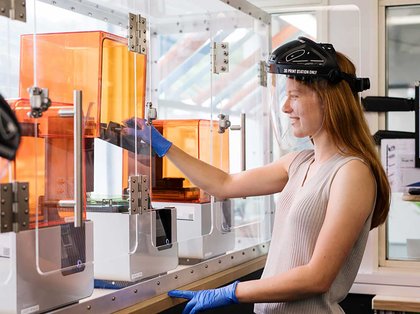
Go 3-dimensional
Whether it's creating spaces or products, take your 3D designs to new levels of innovation at Massey.
Fab first
Our Fab Lab is Australasia's first digital fabrication laboratory – affiliated to MIT, the Massachusetts Institute of Technology.
Ranked in top 200 globally
College of Creative Arts ranks in the global top 200 for art and design by QS World University Rankings.
Reputation counts
With a reputation for innovative research and practice, Massey is the country's oldest creative arts school, dating from 1886.
Overview
Imagine and build. And be mindful of how it affects people and our planet.
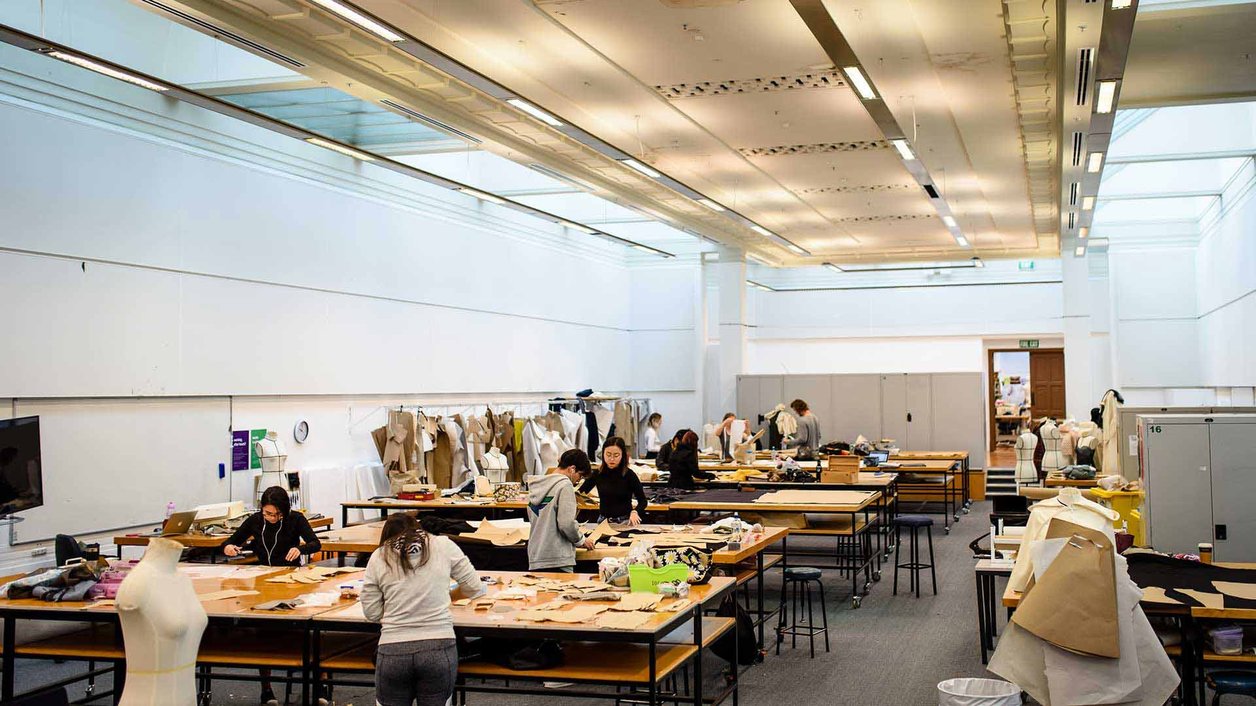
Learn from world-class lecturers with experience as creatives and design experts. Discover new ideas in areas such as interactive environments or prop design. Explore ways of making, from hand-crafting furniture and models to 3D printing and other digital fabrication technologies. Get hands-on and test full-scale prototypes in our well-equipped facilities, including 3D workshop and Fab Lab Wgtn.
Spatial and industrial design are a good fit if you:
- do well in school subjects such as design, visual arts (ngā toi) or technology (hangarau)
- want to create impactful products, services and experiences
- like thinking creatively and getting hands-on to make things.
Key topics
Spatial and industrial design courses may cover:
- 3D modelling
- design processes, including ways to generate ideas and develop innovative concepts
- CAD, rendering and visualisation software, and technical specifications
- ergonomics – designing products to fit the people who'll use them
- human-centred design principles
- lighting and projection design
- prototyping, both digital and physical
- sustainability, including bio-materials
- technical skills needed to work a wide variety of materials
- visual storytelling and presentation.
Competitions
Our staff, students and graduates have a long and rich history of participation and success in design competitions such as:
Partnerships
And we have strong partnerships with companies such as:
- Fisher and Paykel and Fisher and Paykel Healthcare
- Formway
- Warren and Mahoney.
What is industrial design?
Industrial designers create products for use at home, at work or at play. Examples include:
- appliances and devices such as coffee machines, dishwashers or gaming consoles
- bikes, cars or e-scooters
- furniture such as office chairs, kitchen cabinets or handcrafted pieces
- mobility aids
- props for film or TV
- safety equipment
- sportswear or sports equipment
- watches, glasses or jewellery.
Industrial designers merge innovation and usability to take a people-first approach to design – focusing on what people need and how they'll use things.
What is spatial design?
Spatial design includes:
- digital spaces, including virtual reality (VR) and mixed reality
- exhibition and performance design, including temporary structures
- interior architecture
- landscape design
- urban design.
Spatial designers create new environments for people to live, work or play – and devise new ways to interact with physical and virtual spaces.
Bachelor of Design with Honours – BDes(Hons)
Extend your skills and push the boundaries of design innovation with our four-year Honours degree.




How to study spatial and industrial design
Discover what we offer if you’re interested in spatial and industrial design – whether you’re coming to university for the first time, changing direction or returning to advance your study or career.
Undergraduate study
Undergraduate study An undergraduate qualification is generally the first thing you’ll study at university. In some qualifications you can choose what subject you’d like to specialise in.
Bachelor's degrees and bachelor's degrees with Honours
Bachelor of Design – BDes
Change the world through design. Study in New Zealand’s leading and most comprehensive design qualification.
Industrial Design – Bachelor of Design
Industrial design is a great choice if you enjoy designing, inventing, and making three-dimensional products. From smartphones to movie sets, industrial design transforms people’s lives - and Massey grads are at the forefront.
Integrated Design – Bachelor of Design
Take a unified approach to design. Develop strong design strategies and contextual understanding, applying your technical skills in the design fields of your choice.
Mātauranga Toi Māori – Bachelor of Design
Study creative arts and help shape a future where te ao Māori is at the forefront of Aotearoa creative industries. A first for Aotearoa tertiary education, the Mātauranga Toi Māori major engages te ao Māori in any of our creative disciplines in Design – Concept, Fashion, Industrial, Integrated, Photography, Spatial, Textiles or Visual Communication Design.
Spatial Design – Bachelor of Design
From designing a home interior, or public building to an interactive exhibition, or a virtual world, spatial designers have myriad opportunities at their fingertips. Let your imagination soar.
Bachelor of Design with Honours – BDes(Hons)
Extend your skills and push the boundaries of design innovation with our four-year Honours degree.
Industrial Design – Bachelor of Design with Honours
Industrial design is a great choice if you enjoy designing, inventing, and making three-dimensional products. From smartphones to movie sets, industrial design transforms people’s lives - and Massey grads are at the forefront.
Integrated Design – Bachelor of Design with Honours
Take a unified approach to design. Develop strong design strategies and contextual understanding, applying your technical skills in the design fields of your choice.
Mātauranga Toi Māori – Bachelor of Design with Honours
Study creative arts and help shape a future where te ao Māori is at the forefront of Aotearoa creative industries. A first for Aotearoa tertiary education, the Mātauranga Toi Māori major engages te ao Māori in any of our creative disciplines in Design – Concept, Fashion, Industrial, Integrated, Photography, Spatial, Textiles or Visual Communication Design.
Spatial Design – Bachelor of Design with Honours
From designing a home interior, or public building to an interactive exhibition, or a virtual world, spatial designers have myriad opportunities at their fingertips. Let your imagination soar.
Undergraduate certificates
Certificate in Creative Arts – CertCreativeArt
Massey’s Certificate in Creative Arts is a flexible qualification that will introduce you to the basics of design, screen, music and art covering a broad range of creative arts subjects. You can complete this qualification in person on our Wellington campus or via distance.
Undergraduate diplomas
Diploma in Creative Arts – DipCreativeArts
You’ll study with design, screen, music and art degree students in a range of courses covering a broad range of creative arts subjects, studying in-person on our Wellington campus or via distance. Successful completion of this qualification can allow entrance directly into the second year of College of Creative Arts bachelor's degrees.
Graduate diplomas
Graduate Diploma in Design – GDipDes
Develop your technical skills and learn to think like a designer.
Postgraduate study
Postgraduate study Once you’ve graduated with a bachelor’s degree – or have equivalent experience – you’ll be ready to take on postgraduate study.
Master's degrees
Master of Design – MDes
Go in depth with an advanced design research qualification. You’ll develop a creative outcome, often of direct application to design industry or community. We will help you make strong connections with the business, public or non-profit sector.
Master of Fine Arts – MFA
Embed yourself in a rich dialogue about your creative practice in Massey’s Master of Fine Arts. Our MFA embraces intersections between knowledge systems, a spectrum of making processes, and modes of audience engagement.
Postgraduate diplomas
Postgraduate Diploma in Design – PGDipDes
Go beyond your bachelor’s degree and advance your design thinking with a Postgraduate Diploma in Design.
PhD and other doctoral degrees
Doctor of Philosophy – PhD
A prestigious research qualification that demonstrates your ability to carry out independent and original research in your chosen field.
Our facilities
You'll have access to a wide range of first-class facilities when you study with us.
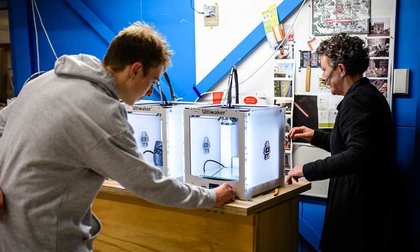
Fab Lab
Fab Lab Wellington is Australasia’s first digital fabrication laboratory affiliated to the Massachusetts Institute of Technology (MIT). Fab Lab's capabilities include:
- A computer-controlled laser cutter
- numerically-controlled milling machine
- a sign cutter
- a precision milling machine to make 3-dimensional moulds
- surface-mount circuit boards
- and small 3D printers.
3D Workshop
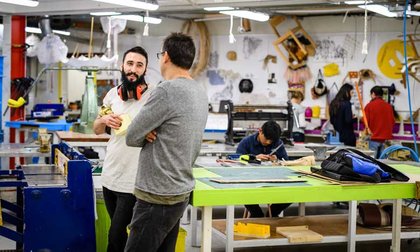
Students can access a number of workshops on campus, alongside technical staff who will introduce them to the equipment and assist them if required. The 3D Workshop has specialty spaces to explore materials, prototyping and manufacturing processes. This includes wood, plastics, engineering, resins/ casting, welding, sanding and spray booths, CNC (water jet cutter, laser cutters, mill, routers) through to wood and metal working machinery and hand tools.
Toystore
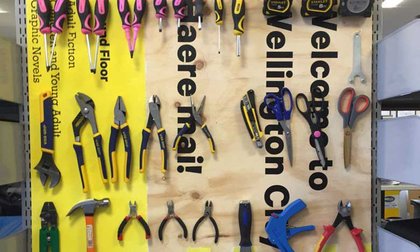
The Toystore offers a wide range of audiovisual equipment for design students to borrow, as well as access to large format printing and technical support.

Virtual and augmented reality
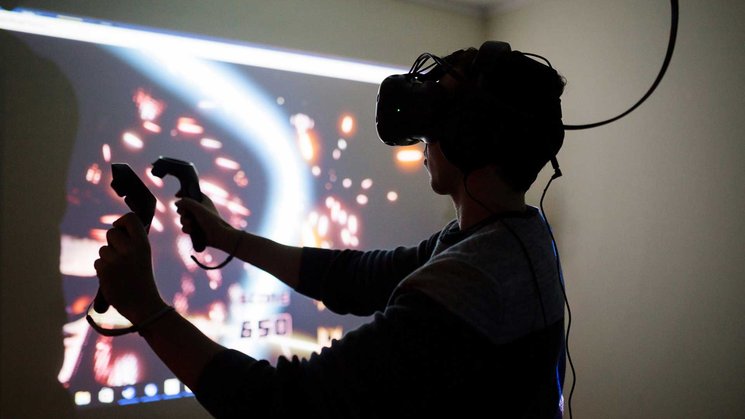
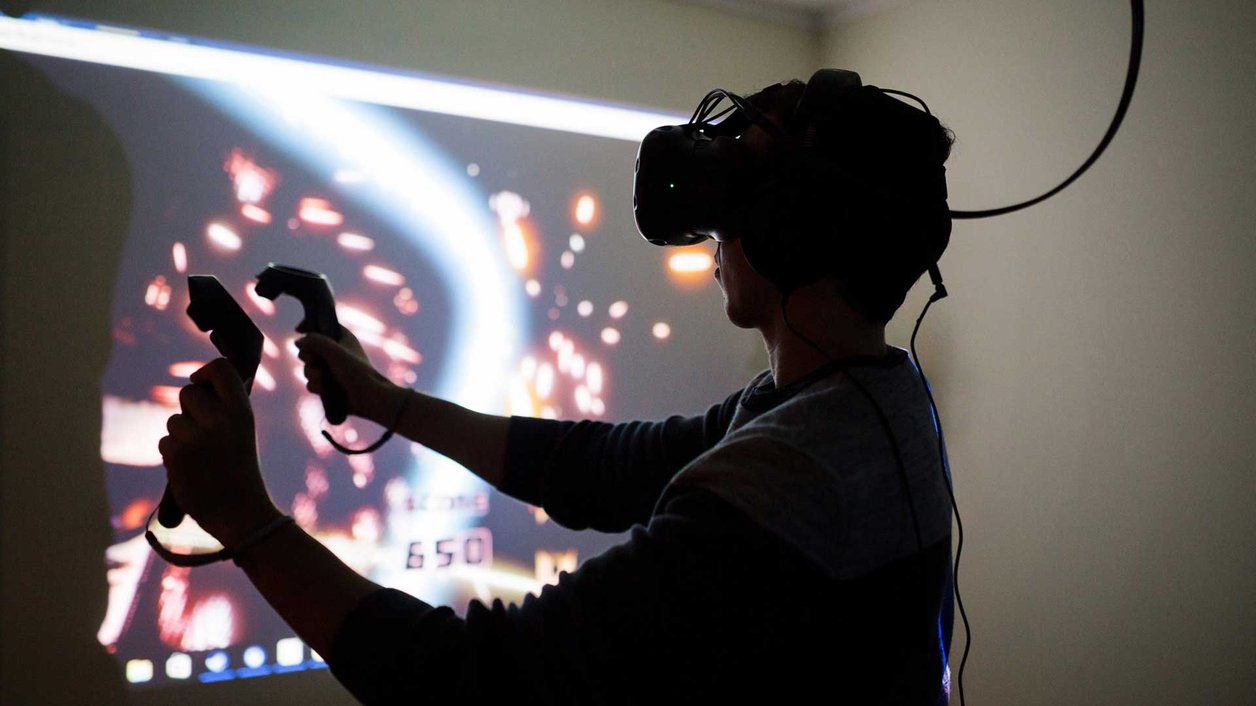
A specialised room where students can explore and prototype virtual spaces and experiences, or create virtual artworks or designs using virtual reality and augmented reality equipment.
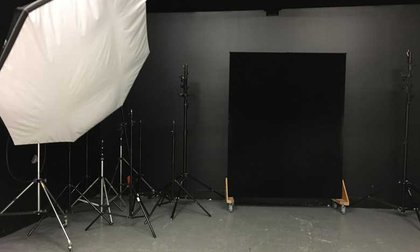
Photo studios
Massey University's Wellington campus has specialised professional photography studios, (white cycs, green screen, Elincrom/Bowens/Diva lite) access only by students enrolled in photographic specialised papers only.
Jobs in spatial and industrial design
Design better and smarter products and spaces, fit for purpose, fit for people, fit for our planet and its resources. Careers can span from entertainment to interiors, electronics to healthcare, car companies to furniture makers.
Some of our graduates are freelance designers, or start their own businesses. Others work in consumer product companies such as Apple, Fisher and Paykel, Kathmandu and Nike, or in creative industries including film and television.
Spatial and industrial design careers include:
- digital experience designers, who create ways for people to interact with digital products or spaces
- exhibition designers for festivals, museums or pop-ups
- industrial and product designers
- interior designers or interior architects, who may specialise in kitchens, restaurants or retail
- prop and FX designers
- service designers
- urban designers.
Annual salary ranges for jobs
- Industrial designer – $71,000 to $117,000
- Interior designer – $55,000 to $89,000
Salary ranges disclaimer
Indicative pay rates are:
- in New Zealand dollars
- based on Tahatū Career Navigator website data.
Which spatial and industrial design qualification?
Examples of where our qualifications may take you.
| Qualification | Jobs |
|---|---|
|
Bachelor of Design with Honours (Mātauranga Toi Māori / Spatial Design) Bachelor of Design with Honours (Spatial Design) Master of Design |
Designer for film, stage or TV |
|
Bachelor of Design with Honours (Mātauranga Toi Māori / Spatial Design) Bachelor of Design with Honours (Mātauranga Toi Māori / Visual Communication Design) Bachelor of Design with Honours (Spatial Design) Bachelor of Design with Honours (Visual Communication Design) |
Experience designer or exhibition designer |
|
Bachelor of Design with Honours (Mātauranga Toi Māori / Spatial Design) Bachelor of Design with Honours (Spatial Design) |
Interior designer or interior architect |
|
Bachelor of Design with Honours (Industrial Design) Bachelor of Design with Honours (Mātauranga Toi Māori / Industrial Design) |
Industrial and product designer |
Accreditations and rankings
QS Ranking - Art & Design
College of Creative Arts – Toi Rauwhārangi ranks in the global top 200 for art and design by QS World University Rankings.

Ranked 2nd in Asia Pacific for the Red Dot Design ranking
Massey is ranked 2nd in Asia Pacific in 2025 in the international Red Dot Design Ranking for the third consecutive year, the only design school to be ranked in New Zealand and Australia. This year’s results places Massey in the top 3 universities in Asia Pacific for the 11th year in a row.
Get an information guide
Download our guides to find out more about studying spatial and industrial design at Massey.
Related areas of interest