- Type of qualification
- Bachelor's degree
- Level of study
-
Undergraduate study
An undergraduate qualification is usually the first one you study.
NZQF level 7Our courses follow the New Zealand Qualification Framework (NZQF) levels.
- Time to complete
-
4 years full-time (480 credits)Part-time available
- Where you can study
-
Manawatū campus (Palmerston North)
-
International students
International students are not New Zealand citizens or residents.
- Not open to international students
Study a Bachelor of Māori Visual Arts – BMVA
Immerse yourself in the only university-based 4-year degree in Māori Visual Arts in Aotearoa and explore Māori visual culture encompassing customary and contemporary Māori art, language, culture and tikanga.
We cater for all levels of proficiency in te reo, and you can learn at the rate that’s right for you.
Be surrounded in a whānau atmosphere by inspiring people that are well-known contemporary artists, who can help you soar to new levels of creativity.
- Develop your art practice in shared studio spaces, from painting and sculpture to photography and installation.
- Be surrounded in a whānau atmosphere by inspiring people who are well-known contemporary artists, and can help you discover new ways of expressing yourself as an artist.
- Learn te reo Māori at the level that’s right for you.
- Explore what it means to be Māori today, and graduate with a sense of identity, pride, and confidence as a contemporary artist.
- Be exposed to indigenous artists, curators and galleries to help grow your career in the arts.
Over time you will develop your own art practice that is deeply grounded in your culture.
As well as Māori, we have students of Pākehā and international indigenous heritage who want to explore a kaupapa-driven approach to contemporary art.
Toioho ki Apiti has a strong relationship with the Te Manawa gallery in Palmerston North. The gallery regularly hosts exhibitions of work by students, staff and alumni. We also offer opportunities to visit art galleries, museums and cultural events in other centres.
Further study
Explore your personal practice and critical engagement with Toi Māori further with the Postgraduate Diploma in Māori Visual Arts or the Master of Māori Visual Arts.
A BMVA is a good fit if you:
- want to explore what it means to be Māori today and seek a supportive whānau environment for learning
- want to express your identity through art and enjoy making and thinking creatively
- want to be mentored by respected contemporary Māori artists.
Entry requirements
Entry requirements
Admission to Massey
All students must meet university entrance requirements to be admitted to the University.
Specific requirements
This is a selected entry qualification. This means there are a number of extra requirements you must meet.
To enter the Bachelor of Māori Visual Arts you will need to:
- provide a portfolio of your work, in the form of slides, photos or actual artworks
- provide a statement (of around 100 words) of why you want to join the BMVA
- take part in an interview.
Application closing date
Applications close on 30 November, for study commencing the following year.
Late applications are welcome.
Language requirements
To study this qualification you must meet Massey University's English language standards. Procedures exist for those students who wish to submit written work, assignments or examinations in Te Reo Māori.
Portfolio requirements
Submit a portfolio showing a selection of your creative work that demonstrates your creative potential with your application to study. Email us to arrange a portfolio pre-approval session:
Maori.Visual.Arts@massey.ac.nz
Selection interview
Once we have received your application, we’ll invite you to a hui so we can learn more about you and your aspirations. While your academic history is important, we also take into account your:
- creative ability
- commitment to Māori creative expression
- commitment to Māori art and scholarship
- maturity
- communication skills.
Prior learning, credit and exemptions
For information on prior learning, exemptions and transfer of credit or other questions:
- review the Recognition of Prior Learning regulations
- contact us through the Get advice button on this page.
English language skills
If you need help with your English language skills before you start university, see our English for Academic Purposes (EAP) courses.
Official regulations
To understand what you need to study and must complete to graduate read the official rules and regulations for this qualification.
You should read these together with all other relevant Statutes and Regulations of the University including the General Regulations for Undergraduate Degrees, Undergraduate Diplomas, Undergraduate Certificates, Graduate Diplomas and Graduate Certificates.
Returning students
For returning students, there may be changes to the majors and minors available and the courses you need to take. Go to the section called ‘Transitional Provisions’ in the Regulations to find out more.
In some cases the qualification or specialisation you enrolled in may no longer be taking new enrolments, so may not appear on these web pages. To find information on the regulations for these qualifications go to the Massey University Calendar.
Please contact us through the Get advice button on this page if you have any questions.
Structure of the Bachelor of Māori Visual Arts
Structure of the Bachelor of Māori Visual Arts
The degree is made up of 4 years as follows:
Year One – Mana Whakapapa
Open your senses to Māori visual culture, exploring your identity through a Māori worldview. Year One gives a basic introduction to the theory of customary Māori art practice, Māori language, studio practice, and electives. Overall, the year lays the foundation for development of contemporary Māori art. Become part of the whānau.
Year Two – Mana Tiriti
Awaken your responsibility to Te Tiriti o Waitangi. Year Two brings a higher level of technical and conceptual awareness in studio practice with a stronger emphasis on research. Te reo Māori is also continued at a higher level and the art theory courses support the development of concepts in studio practice. Become aware and engage with the political context.
Year Three – Mana Whenua
Year Three concentrates on contemporary issues and research, closer observation of contemporary Māori art developments and encourages the implementation of thematic approaches to art production. Carve your own pathway within the landscape of contemporary Māori art.
Year Four – Mana Tangata
Take leadership and responsibility for our creative practice. Year Four is devoted to studio practice. Independent work on approved projects using a variety of media is encouraged. The focus for practical work is on an end-of-year public and external exhibition. He toi whakairo, he mana tangata!
Courses and specialisations
Courses and specialisations
Credit summary
Each course is worth a number of credits. You combine courses (credits) to meet the total number of credits needed for your qualification.
480 credits
- Part One compulsory courses – 90 credits
- Part One electives from the Part One of the Schedule – 30 credits
- Part Two compulsory courses – 90 credits
- Part Two electives from Part Two of the Schedule – 30 credits
- Part Three compulsory courses – 120 credits
- Part Four compulsory studio courses – 120 credits
This is a parts-based qualification. This means there are regulations around your completion of Part One before progressing to Part Two, etc.
Part One (Choose at least 120 credits from)
Compulsory courses (Choose 90 credits from)
Course code: 150106 Nga Hanga Whakairo: Traditional Māori Visual Art 15 credits
An introduction to the scope of Māori art with a view to recognising traditional elementary forms and their significance. Social and cultural dimensions will be considered and Māori art forms from pre-contact times to the present will be examined within the context of a dynamic and changing society.
View full course detailsCourse code: 150107 Mata Puare: Studio IA 30 credits
An exploration of the principles and elements of design and their application within two-dimensional contexts. The cultural significance of Māori design processes will be examined in order to understand interrelationships between form and content.
View full course detailsCourse code: 150108 Mata Puare: Studio IB 45 credits
An exploration of the principles and elements of design and their application within three-dimensional contexts. The cultural significance of Māori design processes will be examined in order to understand interrelationships between form and content.
View full course detailsPlus either
Course code: 300110 Te Reo Whakahoahoa: Socialising in Te Reo 15 credits
An introduction to elementary Māori language structures, Māori terminology and the correct pronunciation of the Māori language.
View full course detailsOr
Course code: 300111 Te Reo Kōnakinaki: Developing Te Reo 15 credits
Ko tēnei whakaakoranga reo Māori hei mahinga mā te tauira kua tīmata kē ki te ako i te reo Māori. Ko tōna tino kaupapa, ka whakamahia te reo hei reo whakawhitiwhiti whakaaro, hei reo kōrerorero i waenganui i te tangata. This course extends listening, speaking and writing competency to enable students to express themselves in Te Reo on a wide range of topics at an introductory level. Emphasis is on spoken and written Māori as a language of communication and interaction.
View full course detailsElective courses: Any one of the following courses or another course approved by the Head of School
Course code: 146101 Understanding Cultural Difference 15 credits
An introduction to key contemporary topics and concepts in the discipline.
View full course detailsCourse code: 150114 He Tirohanga Taketake: Māori Perspectives 15 credits
An analysis of Māori knowledge, custom and economic foundations. Customary lifestyles will be examined within a context of ritual, philosophy, technology, economic principles, and social organisation in order to understand Māori culture.
View full course detailsCourse code: 154101 Media and Society 15 credits
An introduction to theories of the media and communications. Particular attention will be paid to the concepts of representation and audience, the political economy of media products, and the social and cultural context in which they occur.
View full course detailsPart Two (Choose at least 120 credits from)
Compulsory courses (Choose 90 credits from)
Course code: 150206 Ngā Momo Whakairo: Contemporary Māori Visual Art 15 credits
An interpretation of the design structures that constitute Māori art from a bicultural perspective together with an examination of the factors that determine stylistic change.
View full course detailsCourse code: 150207 Mata Oho: Studio IIA 30 credits
An examination of the significance of Māori visual culture with a view to understanding the interrelationships between form and function within 'traditional' and 'contemporary' contexts. Advanced development of media and processes within two-dimensional frameworks.
View full course detailsCourse code: 150208 Mata Oho: Studio IIB 45 credits
An examination of the significance of Māori visual culture with a view to understanding the interrelationships between form and function within 'traditional' and 'contemporary' contexts. Advanced development of media and processes within three-dimensional frameworks.
View full course detailsPlus either
Course code: 300111 Te Reo Kōnakinaki: Developing Te Reo 15 credits
Ko tēnei whakaakoranga reo Māori hei mahinga mā te tauira kua tīmata kē ki te ako i te reo Māori. Ko tōna tino kaupapa, ka whakamahia te reo hei reo whakawhitiwhiti whakaaro, hei reo kōrerorero i waenganui i te tangata. This course extends listening, speaking and writing competency to enable students to express themselves in Te Reo on a wide range of topics at an introductory level. Emphasis is on spoken and written Māori as a language of communication and interaction.
View full course detailsOr
Course code: 300210 Te Reo Kōrerorero: Discussing in Te Reo 15 credits
Nei rā te reo kōrero, te reo tuhituhi hei reo whakawhitiwhiti i roto i roto i te nohotahitanga a te tangata. Ka tirohia te takotoranga o te reo, ngā kupu kei te hāngai ki ngā kaupapa maha, otirā, ka tirohia ngā kīpeha pēnei i te kīwaha. Taught in te reo, this course emphasises the use and understanding of spoken and written Māori, focusing on the structure of the language, expanding vocabulary and using figures of speech such as colloquialisms.
View full course detailsElective courses: Any one of the following courses or another course approved by the Head of School
Course code: 139362 Oceanic Literatures of Aotearoa: Ngā Tuhinga Kōrero o te Moana nui a Kiwa 15 credits
A study of contemporary Oceanic (Māori and Pasifika) literature in English contextualised in relation to customary and pre-colonial Oceanic literatures, narratives, and storytelling methods.
View full course detailsCourse code: 150303 Mana Wahine: Māori Women 15 credits
A theory and research based examination of issues that concern Māori women in all contexts, including the roles that Māori women assume both within a Māori social framework and beyond. Theories of mana wahine and the ways mana is maintained, enhanced or lessened will be examined.
View full course detailsPart Three (Choose at least 120 credits from)
Compulsory courses (Choose 105 credits from)
Course code: 150201 Te Kawenata o Waitangi: The Treaty of Waitangi in New Zealand Society 15 credits
A study of the Treaty of Waitangi background, texts, principles, and application to contemporary New Zealand. There is a particular focus on land, legislation, court decisions, social policies, the environment, constitutional matters, claims to the Waitangi Tribunal and Treaty settlements. Differing perspectives of hapū/iwi/Māori and the Crown, as well as opportunities for resolution, are explored.
View full course detailsCourse code: 150307 Mata: Studio IIIA 30 credits
Advanced development of 150.207 in selected areas. An approved, individually conceived programme with content related to personal strengths and interests within two-dimensional frameworks.
View full course detailsCourse code: 150308 Mata: Studio IIIB 60 credits
Advanced development of 150.208 in selected areas. An approved, individually conceived programme with content related to personal strengths and interests within three-dimensional frameworks.
View full course detailsPlus
Course code: 300210 Te Reo Kōrerorero: Discussing in Te Reo 15 credits
Nei rā te reo kōrero, te reo tuhituhi hei reo whakawhitiwhiti i roto i roto i te nohotahitanga a te tangata. Ka tirohia te takotoranga o te reo, ngā kupu kei te hāngai ki ngā kaupapa maha, otirā, ka tirohia ngā kīpeha pēnei i te kīwaha. Taught in te reo, this course emphasises the use and understanding of spoken and written Māori, focusing on the structure of the language, expanding vocabulary and using figures of speech such as colloquialisms.
View full course detailsNote, if 300.210 has already been passed, a course approved by the Head of School
Part Four (Choose 120 credits from)
Compulsory courses (Choose 120 credits from)
Course code: 150407 Matatau: Studio IVA 60 credits
Advanced conceptual development of 150.307 in selected areas. An approved individually conceived programme with content related to personal strengths and interests within two-dimensional frameworks.
View full course detailsCourse code: 150408 Matatau: Studio IVB 60 credits
Advanced conceptual development of 150.308 in selected areas. An approved individually conceived programme with content related to personal strengths and interests within three-dimensional frameworks.
View full course detailsFees and scholarships
Fees and scholarships
2026 tuition fees
- Domestic students: $8,420
- International students: Not applicable
Tuition fees are estimates only. The exact fees charged will depend on which courses you select at the time of enrolment. The estimates are for full-time study (120 credits). Fees are in New Zealand dollars and include Goods and Services Tax (GST).
The estimates do not include the Student Services Fee. This fee is $1,164 for on-campus students and $948 for distance students for full-time study (120 credits). For more information about this fee and other fees you may need to pay, see non-tuition fees.
There may also be charges for things such as study resources, software, trips and contact workshops.
Course fees
You can view fees for the courses that make up your qualification on the course details pages.
Student loans (StudyLink) and Fees Free scheme
You may be eligible for a student loan to help towards paying your fees.
The New Zealand Government offers fees-free tertiary study for eligible domestic students. Find out more about the scheme, including how much could be covered and your eligibility on the Inland Revenue website.
Scholarships and awards
- Central Energy Trust Bursary
- Collin Post Memorial Scholarship in Sculpture
- He Oha Puiaki - Massey University Māori First Year Scholarship
- Hinemoa Hilliard Memorial Scholarship
- Massey University Undergraduate First Year Scholarship – School Leavers
- Toioho Ki Apiti Undergraduate Scholarship
- Toroa International Undergraduate Fee Scholarships - Semester 2, July 2026
Careers and job opportunities
Careers and job opportunities
The Bachelor of Māori Visual Arts has led our graduates into rewarding and diverse careers, including:
- Work as an artist (independent practice, exhibitions, commissions)
- Teaching Māori art at secondary or tertiary levels
- Gallery work (exhibitions, programming, education, collections)
- Museum work (curation, research, education, collections care)
- Curatorial work (developing exhibitions and Māori art collections)
- Art conservation and restoration (including taonga and Māori artworks)
- Arts administration and management (in arts organisations, trusts, and community centres)
- Public art and community-based projects (with councils, iwi, or community groups)
- Work in iwi and Māori cultural development (cultural revitalisation, iwi-led projects, marae-based initiatives)
- Work in design-related industries (graphic design, fashion, publishing, product design)
- Creative industries (film, television, animation, gaming, advertising)
- Cultural advisory roles (providing tikanga and visual culture expertise for institutions, businesses, and government)
- Research and writing (art history, cultural studies, Indigenous studies, art criticism)
- Art therapy and wellbeing initiatives (community health and hauora-focused projects)
- Event and festival organisation (Māori and Indigenous arts festivals, exhibitions, biennales)
- Entrepreneurship (creative businesses, galleries, studio practices, collectives)
What our students say
“The amazing lecturers have open minds about different whakaaro, different types of work and you’re appreciated for your ideas. I wouldn’t be where I am today without the BMVA… the skills to express myself and the confidence and passion I’ve gained in my art and in where I come from, in my pepeha.”
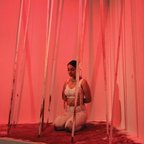
Ngāti Porou, Te Whānau-a-Apanui, Ngāti Kauwhata, Rakahanga (Cook Islands)
“I came to uni so that I can find out more about myself as a wahine Māori and I think this degree is helping me do that.”

Accreditations and rankings
QS Ranking - Art and Design
Massey is ranked among the global top 200 universities for art and design by QS World University Rankings.
Related study options
Graduate Diploma in Design – GDipDes
Develop your technical skills and learn to think like a designer.
Master of Design – MDes
Go in depth with an advanced design research qualification. You’ll develop a creative outcome, often of direct application to design industry or community. We will help you make strong connections with the business, public or non-profit sector.
Master of Māori Visual Arts – MMVA
Challenge your own toi Māori practice, and learn from and be inspired by leading artists.
Photography – Bachelor of Design with Honours
Great photographers shake us, shift our perceptions and entice us to see things differently. Learn from leading photographers and develop your technical skills with our professional cameras and specialist studios and labs.
Photography – Bachelor of Design
Great photographers shake us, shift our perceptions and entice us to see things differently. Learn from leading photographers and develop your technical skills with our professional cameras and specialist studios and labs.
Postgraduate Diploma in Design – PGDipDes
Go beyond your bachelor’s degree and advance your design thinking with a Postgraduate Diploma in Design.
Postgraduate Diploma in Māori Visual Arts – PGDipMVA
Toioho ki Āpiti (the Māori visual arts qualification at Massey) welcomes all indigenous and Pākehā artists.
Related content