- Type of qualification
- Bachelor's degree
- Level of study
-
Undergraduate study
An undergraduate qualification is usually the first one you study.
NZQF level 7Our courses follow the New Zealand Qualification Framework (NZQF) levels.
- Time to complete
-
3 years full-time (360 credits)Part-time available
-
International students
International students are not New Zealand citizens or residents.
- Open to international students on campus in New Zealand, or studying on-line outside New Zealand
Study a Bachelor of Sport and Exercise – BSpEx
Get a broad, interdisciplinary understanding of key sport and exercise concepts and knowledge. Then dig deeper by choosing 1 of 3 specialist areas.
Our blended learning approach means you can study on our Manawatū campus or online by distance. This will allow you to balance study, work and play. You'll gain invaluable real-world experience in our sport and exercise practicum. This hands-on internship can be based anywhere in New Zealand, or even overseas. You will apply your skills and knowledge as you prepare for entry to the workforce.
World-class, highly experienced staff
You will learn from the best, with many of our staff involved in sport as competitors, coaches, administrators and managers. Our research-active academic staff will teach you the most up to date information to help prepare you for the ever-changing and expanding world of sport and exercise.
Further study
Following successful completion of your Bachelor of Sport and Exercise, you may be interested in the Master of Health Science (Sport and Exercise)
A BSpEx is a good fit if you:
- are passionate about sport and exercise
- see the potential for sport and exercise to positively impact society
- want to help people live happier, healthier, better lives.
Entry requirements
Entry requirements
Admission to Massey
All students must meet university entrance requirements to be admitted to the University.
Specific requirements
There are no specific entry requirements for this qualification, outside of university admission regulations.
English language requirements
To study this qualification you must meet Massey University's English language standards.
Prior learning, credit and exemptions
For information on prior learning, exemptions and transfer of credit or other questions:
- review the Recognition of Prior Learning regulations
- contact us through the Get advice button on this page.
English language skills
If you need help with your English language skills before you start university, see our English for Academic Purposes (EAP) courses.
Official regulations
To understand what you need to study and must complete to graduate read the official rules and regulations for this qualification.
You should read these together with all other relevant Statutes and Regulations of the University including the General Regulations for Undergraduate Degrees, Undergraduate Diplomas, Undergraduate Certificates, Graduate Diplomas and Graduate Certificates.
Returning students
For returning students, there may be changes to the majors and minors available and the courses you need to take. Go to the section called ‘Transitional Provisions’ in the Regulations to find out more.
In some cases the qualification or specialisation you enrolled in may no longer be taking new enrolments, so may not appear on these web pages. To find information on the regulations for these qualifications go to the Massey University Calendar.
Please contact us through the Get advice button on this page if you have any questions.
Structure of the Bachelor of Sport and Exercise
Structure of the Bachelor of Sport and Exercise
If you study full-time, in your first year, you’ll take eight 15-credit courses, making a total of 120 credits.
If you plan to study full-time over 2 semesters, you should aim for 60 credits per semester. You may be able to take some courses at summer school. Make sure you include courses that are prerequisites for the next level of courses you wish to study.
The courses in your first year are common to all majors.
Typical pattern for the Bachelor of Sport and Exercise
Core courses These courses are a compulsory part of your qualification.
Major courses Choose from a selection of courses appropriate for your specialisation.
Elective courses Follow your interests. Your qualification may have selection guidelines for elective courses.
| Year One |
|---|
| 234140 Introduction to Physical Education |
| 234131 Introduction to Sport Organisations and Development |
| 250100 Health Communication |
| 234141 Introduction to Human Movement and Hauora |
| 234111 Training Principles and Practice |
| 234135 Sociology of Sport and Exercise |
| 234121 Functional Anatomy |
| Major |
| Year Two |
|---|
| Major |
| Major |
| Major |
| Major |
| Major |
| Major |
| Elective |
| Elective |
| Year Three |
|---|
| Major |
| Major |
| Major |
| 234338 Sport and Exercise Practicum 30 credits |
| Elective |
| Elective |
| Elective |
Courses are each worth 15 credits, unless otherwise indicated
Courses and specialisations
Courses and specialisations
Credit summary
Each course is worth a number of credits. You combine courses (credits) to meet the total number of credits needed for your qualification.
360 credits
- Core courses – 105 credits
- Major courses – 180 credits
- Electives – 75 credits
Ensure that overall, you have:
- Not more than 165 credits at 100 level
- At least 75 credits at 300 level
Schedule A: Core courses
Compulsory courses (Choose 105 credits from)
Course code: 234111 Introduction to Exercise and Training 15 credits
An introduction to factors that influence the health and performance outcomes of exercise and training.
View full course detailsCourse code: 234121 Functional Anatomy 15 credits
An introduction to the structure and function of the musculoskeletal, neuromuscular and cardiopulmonary systems and their importance to health, movement and exercise.
View full course detailsCourse code: 234131 Introduction to Sport Organisations and Development 15 credits
An introduction to the provision of sport, fitness, and physical activity, including the roles of, and relationships between, key organisations and agencies
View full course detailsCourse code: 234135 Sociology of Sport and Exercise 15 credits
An introduction to sociological concepts, principles and theories as applied to sport and exercise.
View full course detailsCourse code: 234140 Introduction to Physical Education 15 credits
An introduction to health and physical education through the exploration of a range of teaching models, management techniques, contemporary issues, and diversity with consideration to the Treaty of Waitangi relevant to undergraduate students.
View full course detailsCourse code: 234141 Introduction to Human Movement and Hauora 15 credits
An introduction to human movement (Te Ao Kori) and its application to the concept of Hauora (holistic health and well-being).
View full course detailsCourse code: 250100 Health Communication 15 credits
This course examines the key principles, ethics and theories of effective health communication for positive health change in individuals and communities. Students will learn to develop and critically analyse health-related messages and research, engage with culturally diverse audiences, and consider social, biological and environmental determinants in health communication.
View full course detailsSchedule B: Specialisations
Majors
Some qualifications let you choose what subject you'd like to specialise in. Your major or endorsement is what you will take the majority of your courses in.
Completing a major is compulsory. A major requires 180 credits including at least 60 credits at 300 level.
Exercise Prescription
Massey’s Bachelor of Sport and Exercise (Exercise Prescription) will give you the knowledge and skills to assess, develop and implement exercise and lifestyle interventions to enhance sport performance, health, and wellbeing.
Physical Education
The Bachelor of Sport and Exercise (Physical Education) will prepare you for a satisfying career working with youth in sport and exercise.
Sport Development
You'll gain the knowledge and skills to promote participation, support communities and deliver sport and physical activity initiatives across all levels; from grassroots to elite sport.
Fees and scholarships
Fees and scholarships
2026 tuition fees
- Domestic students: $8,420
- International students: $42,300
Tuition fees are estimates only. The exact fees charged will depend on which courses you select at the time of enrolment. The estimates are for full-time study (120 credits). Fees are in New Zealand dollars and include Goods and Services Tax (GST).
The estimates do not include the Student Services Fee. This fee is $1,164 for on-campus students and $948 for distance students for full-time study (120 credits). For more information about this fee and other fees you may need to pay, see non-tuition fees.
There may also be charges for things such as study resources, software, trips and contact workshops.
Course fees
You can view fees for the courses that make up your qualification on the course details pages.
Student loans (StudyLink) and Fees Free scheme
You may be eligible for a student loan to help towards paying your fees.
The New Zealand Government offers fees-free tertiary study for eligible domestic students. Find out more about the scheme, including how much could be covered and your eligibility on the Inland Revenue website.
Scholarships and awards
- Central Energy Trust Bursary
- He Oha Puiaki - Massey University Māori First Year Scholarship
- Massey University Academy of Sport First Year Scholarship
- Massey University Academy of Sport Returners Scholarships
- Massey University Undergraduate First Year Scholarship – School Leavers
Careers and job opportunities
Careers and job opportunities
The BSpEx will prepare you for a variety of careers in the growing areas of community sport, fitness, professional sport, sport administration, health and wellness, including roles in:
- community and commercial sports and fitness centres
- medical centres, hospitals, clinics and aged care facilities
- national and regional sporting organisations
- sport events and recreation programmes
- sport venues and facilities
- health and physical activity promotion
- high performance sport
- athlete development
- schools and education (further study required, such as Massey's Graduate Diploma of Learning and Teaching).
What our students say
“My studies deepened my understanding of the body as a vehicle for holistic wellbeing, highlighted its bidirectional relationship with mental health and reinforced the importance of culturally responsive practice.”

“I have been able to network with a range of people within the sport and exercise industry and to apply theory to practice, which has enhanced my overall learning experience. I learnt to get comfortable with the uncomfortable, in order to enhance my confidence.”

“My degree has qualified my passion for sport into a prosperous profession in coaching, teaching, leading and managing sport teams.”
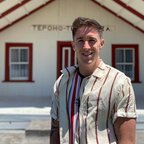
Ngāti Porou
Accreditations and rankings
Register of Exercise Professionals
Massey's Bachelor of Sport and Exercise (Exercise Science) is recognised by the Register of Exercise Professionals (REPS). Graduates can register as exercise professionals with REPS.
QS Ranking - Sports-related Subjects
Massey is ranked among the top 150 in the world for sports-related subjects in the Quacquarelli Symonds (QS) World University Rankings.

ShanghaiRanking - Sport Science Schools
Massey's School of Sport, Exercise and Nutrition is ranked in the top 200 Global Shanghai Ranking of Sport Science Schools and Departments.
Related content