- Type of qualification
- Doctor of Philosophy (PhD)
- Level of study
-
Postgraduate study
Once you’ve graduated with a bachelor’s degree – or have equal experience – you can study at the postgraduate level. Doctoral qualifications require additional entry requirements.
NZQF level 10Our courses follow the New Zealand Qualification Framework (NZQF) levels.
- Time to complete
-
3 years full-time (360 credits)Part-time available
- Where you can study
-
Auckland campusWellington campusManawatū campus (Palmerston North)
-
International students
International students are not New Zealand citizens or residents.
- Open to international students on campus in New Zealand
Study a Doctor of Philosophy – PhD
To do a PhD you need to have a passion and commitment for your discipline.
The degree is awarded for a thesis that demonstrates your ability to carry out independent and original research. It also needs to provide a significant contribution to the knowledge and understanding of a field of study.
Opportunities for research and career development
Developing effective communication skills are prioritised at Massey. We support you with research communications events such as the 3MT (Three-Minute Thesis) competition.
We also place great importance on personal effectiveness. We offer you the opportunity to do the Strengths@Massey programme. This supports the building of good relationships with supervisors and peers and informs effective ways of achieving research outputs.
We also provide opportunities for intensive writing through our 3-day thesis writing boot camps. You are provided with the support and infrastructure that allows you to dedicate your time to writing without any distractions
Research training
You will have access to a whole suite of workshops through support services such as the library, the Centre for Teaching & Learning, Career Hub and the Graduate Research School. These include:
- highly tailored writing sessions
- training on using databases and data management
- project management
- understanding research funding
- applying for a grant through to intercultural communications
- entrepreneurship and innovation.
You can find more information on our prospective doctoral students pages.
A PhD is a good fit if you:
- want a research career in industry or academia
- have a passion for your subject
- wish to become an expert in your field.
Entry requirements
Entry requirements
Admission to Massey
All students must meet university entrance requirements to be admitted to the University.
Specific requirements
To enter the Doctor of Philosophy (PhD) you will:
- have completed a postgraduate bachelor's (honours) or master's degree with First Class Honours or Second Class Honours (Division I) B+ equivalent, or equivalent qualification
- have sufficient independent research experience to satisfy the Doctoral Research Committee that you have the capacity to successfully undertake the qualification.
Massey University’s Doctoral Research Committee administers the PhD. Registration must be supported by the relevant Head of School/Centre who will agree to provide supervision and facilities for your research.
Please note that there are more applicants than places. If you meet the above conditions you will also go through a selection process including an interview. If successful in this process, you will be offered a place.
English language requirements:
Academic IELTS score of 6.5 with no band less than 6.0* - this must be achieved in 1 sitting; or a minimum TOEFL iBT of 90 overall (minimum of 20 in writing). These tests are valid for 2 years.
*Note: The Institute of Education requires an overall score of 6.5, with a minimum of 7 in Reading and Writing and a minimum of 6 in Listening and Speaking.
International qualifications
International qualifications will be assessed in terms of their broad equivalence to a Massey honours or master’s degree with Grade Point Equivalency. Typically this should be 75% or B+. Admissions with Equivalent Status will be used to assess the quality and ranking of the overseas institution.
A qualifying degree, like domestic qualifications, must include a supervised research component such as a substantial thesis or dissertation and previous research methods study is recommended.
Academic references
You must supply good academic references. The referees should know you in an academic capacity. At least 1 should be a supervisor for the research component of your most recent qualification (honours/masters). Contact them before you submit your application. Follow up to make sure they have received the request. We do not accept personal friends or relatives as referees.
Documents you need to provide
Following the admission screening stage, we may request verified copies of the following documents:
- transcripts for all tertiary qualifications, master's, bachelor's etc, even if these are incomplete
- grading legends for all tertiary qualifications
- all graduation certificates, unless completion is noted on the transcripts
- Curriculum Vitae
- references to any publications you have
- English language test results (if you are from a country where English is not the first language)
- evidence of your citizenship.
Please make sure you have all of these ready before applying as it will speed up the application process.
Maximum time limits for completion
There are maximum time limits for this qualification. If you do not complete within the maximum time, you may be required to re-apply for the qualification if you wish to continue your studies.
More information
- Read the regulations thoroughly
- Contact us through the Get advice button on this page if you have any questions.
Official regulations
Review this important information before you apply for this programme. This gives you full details of the rules and regulations about what you need to study and what you must achieve in order to graduate with this qualification. That includes structure, courses and requirements.
Returning students
For returning students, there may be changes to the majors and minors available and the courses you need to take. Go to the section called ‘Transitional Provisions’ in the Regulations to find out more.
In some cases the qualification or specialisation you enrolled in may no longer be taking new enrolments, so may not appear on these web pages. To find information on the regulations for these qualifications go to the Massey University Calendar.
Please contact us through the Get advice button on this page if you have any questions.
Structure of the Doctor of Philosophy
Structure of the Doctor of Philosophy
If you are interested in a PhD at Massey, you should consult with the postgraduate coordinator for the specific subject area you are interested in.
International students are required to have appropriate insurance cover. Massey has a default cover, StudentSafe, which is the preferred insurance provider.
If you have any questions, contact us through the Get advice button on this page.
Courses and specialisations
Courses and specialisations
Credit summary
Each course is worth a number of credits. You combine courses (credits) to meet the total number of credits needed for your qualification.
360 credits
- Thesis
Requirements include the completion of a thesis which includes a provisional year. This means your progress will be assessed after 9-12 months (full-time) or 12-16 months (part-time) before you are fully registered as a PhD candidate.
You will be required to report on your progress every 6 months.
The final examination process includes the submission of a written document (thesis) and an oral defence. If you are in the Creative Arts, the examination may include an exhibition/installation/performance, with an exegesis, and oral defence.
Fees and scholarships
Fees and scholarships
2026 tuition fees
- Domestic students and international students studying in New Zealand: $8,066
- International students studying from overseas: $38,840
Tuition fees are estimates only. The exact fees charged will depend on which courses you select at the time of enrolment. The estimates are for full-time study (120 credits). Fees are in New Zealand dollars and include Goods and Services Tax (GST).
The estimates do not include the Student Services Fee. This fee is $1,164 for on-campus students and $948 for distance students for full-time study (120 credits). For more information about this fee and other fees you may need to pay, see non-tuition fees.
There may also be charges for things such as study resources, software, trips and contact workshops.
Course fees
You can view fees for the courses that make up your qualification on the course details pages.
Student loans (StudyLink) and Fees Free scheme
You may be eligible for a student loan to help towards paying your fees.
The New Zealand Government offers fees-free tertiary study for eligible domestic students. Find out more about the scheme, including how much could be covered and your eligibility on the Inland Revenue website.
Scholarships and awards
- Amelia Earhart Fellowship
- ANZMES research funding opportunities
- Asia New Zealand Foundation Postgraduate Research Grants
- C Alma Baker Trust Postgraduate Scholarship
- China Scholarship Council (CSC) - Massey University PhD Scholars Programme
- Dr Eric Ojala Postgraduate Scholarship in Agricultural Policy Research
- Edward & Isabel Kidson Scholarships
- GWNZ Fellowships
- Henry Kelsey Research Scholarships
- Heseltine Ecology Bursary
- Joe Walding Memorial Bursary
- John Waller Doctoral Scholarship
- Julie Alley Bursary
- Māori Futures Programme Phd Scholarships
- Mary Mallon Memorial Scholarship
- Massey Singapore Food Technology PhD Scholarship
- Massey University Alumni Doctoral Scholarship
- Massey University Doctoral Conference Grants
- Massey University Doctoral Scholarship
- Massey University Pacific Success Scholarship for Doctoral Students
- Mona and Rex McClenaghan Veterinary Scholarship
- Postgraduate Scholarships for Antarctic Research
- RHT Bates Postgraduate Scholarship
- Ross Beever Memorial Mycological Award
- Sinclair Cummings Veterinary and Animal Sciences Scholarship
- Sydney Campbell Foundation Postgraduate Scholarship
- The Agricultural Life Sciences PhD Travel Grant
- The Centenary History of New Zealand and the First World War Heritage Scholarship
- The HOPE Foundation for Research on Ageing Scholarship
- The Miss E L Hellaby Indigenous Grasslands Research Trust
- The Ryoichi Sasakawa Young Leaders Fellowship Fund (Sylff) Postgraduate Scholarship
- Vernon Willey Trust
What our students say
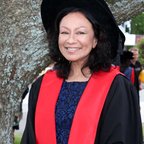
“It has been a life-changing experience for me.”
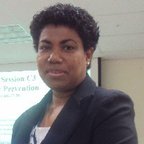
“Massey University provides an excellent platform for international students.”
Related study options
Certificate of Proficiency (Student Exchange) – CPSTX
Explore New Zealand while you study at Massey, a world-ranked university offering excellent courses.
Certificate of Proficiency Postgraduate – CoP Postgrad
Pursue an interest or prepare for further study. This Certificate is for those intending to complete only 1 or 2 courses at postgraduate level.
Certificate of Proficiency Sub Degree – CPSBD
Pursue an interest or prepare for further study. This Certificate is for those intending to complete only 1 or 2 courses at sub-degree level.
Certificate of Proficiency Undergraduate – CPUND
Pursue an interest or prepare for further study. This Certificate is for those intending to complete only 1 or 2 courses at undergraduate level.
Diploma (Business) – DipBus
A stepping stone to university study for international students interested in studying business at Massey
Diploma in Science and Technology – DipScTech
Undertake a shorter, more flexible study option with the Diploma in Science and Technology at Massey.
Graduate Diploma (Management) – GradDip(Mgt)
A specially designed bridging qualification for international students that will allow you to transition into a Master of Management, specialising in Management
Graduate Diploma (Marketing) – GradDip(Mrk)
A stepping-stone to higher learning for international students interested in marketing at masters level
Graduate Diploma in Science and Technology – GDipScTech
The Graduate Diploma in Science and Technology gives you the opportunity to retrain in an area of science that interests you.
Without Specialisation – Postgraduate Diploma in Science and Technology
Massey University’s Postgraduate Diploma in Science and Technology is a stepping stone to a research-based qualification.
Related content